Rain is the raw material of Eryri. It falls on nine mountain ranges and comes off the edges as white water — more waterfalls worth a day out than anywhere else in Wales, and most of them a short walk from a car park.
The three to build a trip around are Aber Falls, the 37-metre curtain below the Carneddau; Swallow Falls, the stepped cascade two miles from Betws-y-Coed; and the Watkin Path pools on Snowdon's southern flank, where swimming is on the menu. They slot easily into wider days out in Snowdonia, and the guide below gives each fall's parking, fees, walk times and swim verdict.
Snowdonia Waterfalls at a Glance
If you only have time for three, make them Aber, Swallow and the Watkin pools. Aber is the most visited waterfall in Eryri and the easiest big fall to reach; Swallow is the famous one; the Watkin pools are the ones you can swim in. Everything else on this list is a variation on those themes — quieter, taller, or stranger.
Map signs are in Welsh. Rhaeadr means waterfall and pistyll is the other common word for one, so Rhaeadr Fawr is simply "big waterfall". One caveat before you plan: Pistyll Rhaeadr, which appears on most Snowdonia waterfall lists, lies just outside the park boundary near Llanrhaeadr-ym-Mochnant — it's covered below as a detour, not an in-park stop.
| Waterfall | Nearest hub | Best for | Walk from car | Entry | Swim? |
|---|---|---|---|---|---|
| Aber Falls | Abergwyngregyn (A55) | Families, first-timers | ~40 min each way, flat | Free; £5 parking | Plunge pool, with care |
| Swallow Falls | Betws-y-Coed | The famous view | 5 min from turnstile | £2 | No |
| Conwy Falls | Betws-y-Coed | Woodland walk, café | ~10 min | £1.50–2 | No |
| Watkin Path pools | Nant Gwynant | Wild swimming | 20–30 min | Free | Yes, not after rain |
| Ceunant Mawr | Llanberis | Easy photo stop | 15 min | Free | No |
| Rhaeadr Ddu | Ganllwyd | Quiet gorge walk | Short stroll | Free | No |
Aber Falls (Rhaeadr Fawr): the Signature Cascade
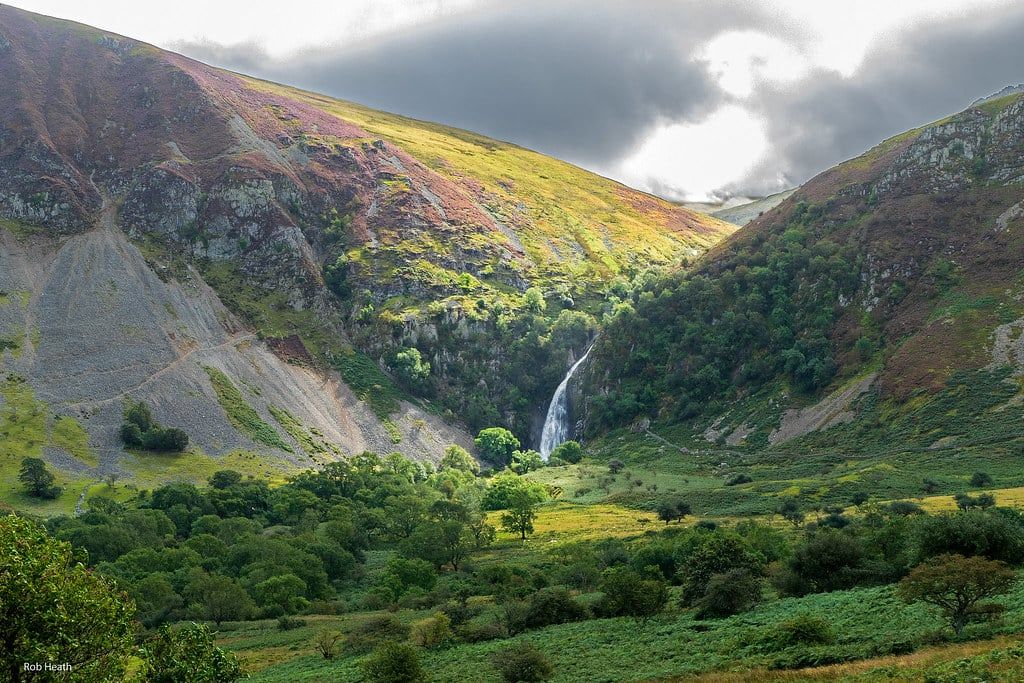
Eryri's most visited waterfall earns its crowds — a single 37-metre drop on the easiest trail in this guide.
1. Aber Falls (Rhaeadr Fawr)
Where the Afon Goch crosses an igneous rock sill at the head of the Aber Valley, the river leaves the Carneddau in one 37 m (120 ft) curtain. The fall sits inside the Coedydd Aber National Nature Reserve and the National Trust manages the trail. After wet weather the whole face runs white; in a dry August it thins to a lacework you can see the rock through.
Getting there is half the appeal. Turn off the A55 at junction 13 for Abergwyngregyn, park at LL33 0LP (£5 for the day, toilets on site) and follow 2 km of compacted gravel up the valley. The path is flat enough for pushchairs, and signage allows 1 hr 30 min–2 hrs return. Most families take longer, and there's plenty to slow them down.
En route you'll pass a Bronze Age roundhouse and standing stones, plus the Carneddau's wild ponies when they graze low. Rhaeadr Bach, a smaller fall with climbable plunge pools at its top, is a five-minute walk beyond the main viewpoint. The pool below the big fall is a popular swim — deep, cold and slippery underfoot. If the weather turns, Aber Falls Distillery sits near the car park.
Swallow Falls & Conwy Falls: the Betws-y-Coed Duo
Two of the park's ticketed falls sit within a few miles of Betws-y-Coed, which makes them a natural pair — both in one morning is easy.
2. Swallow Falls (Rhaeadr Ewynnol)
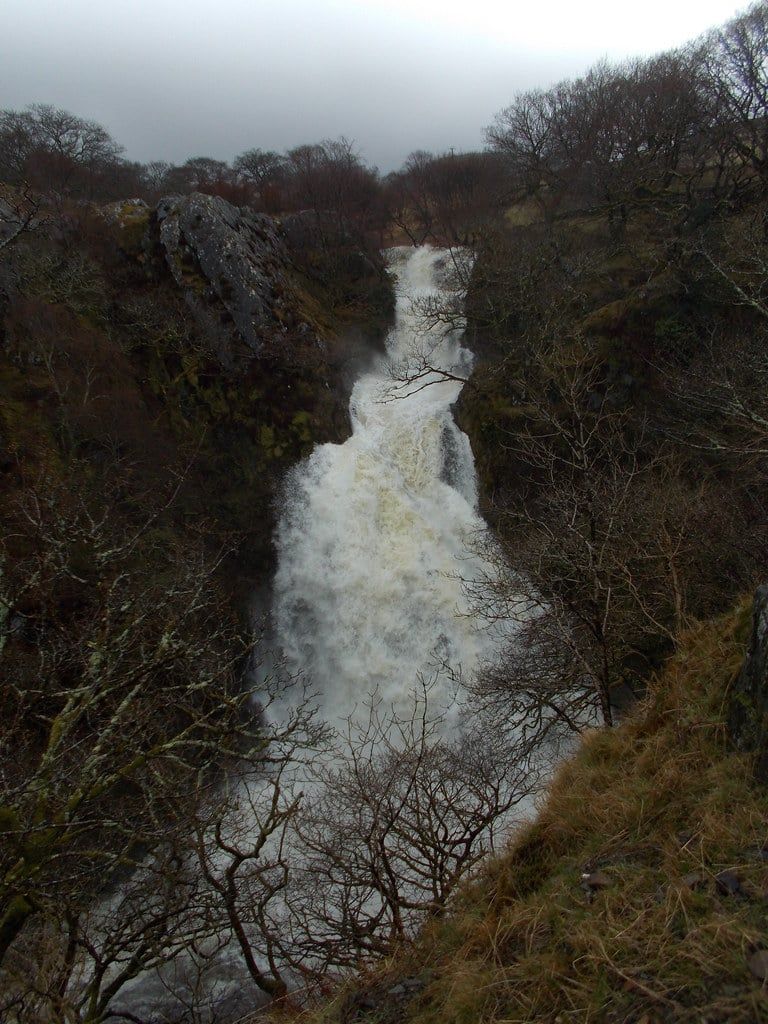
Swallow Falls is where the Afon Llugwy tears through a rocky gorge in a chain of cascades, two main drops totalling 42 m, two miles west of Betws-y-Coed. It's the most famous waterfall in Wales and a filming location for Wonder Woman 1984. Entry is through the famous turnstile: £2 per person, coins or contactless, open all year. In October the turnstile runs 10am–3pm only.
Two viewing platforms sit above the gorge, with steps down to lower sections and disabled access available April to October. Don't swim here — the currents are strong even in low water. The budget alternative: park at Ty Hyll (the Ugly House) and walk half a mile downstream on the north bank to a free viewpoint opposite the paid platforms. Same water, no fee.
3. Conwy Falls (Rhaeadr y Graig Lwyd)
Conwy Falls is the cheaper, quieter sibling. Entry costs £1.50–2 depending on the season, the café car park is free, and a forest trail of roughly ten minutes drops to the Fairy Glen — a wooded gorge where the river Conwy runs hard beneath the trees, with a salmon ladder beside the fall. Watch for leaping fish in season.
The café above the car park was designed by Sir Clough Williams-Ellis, the architect of Portmeirion, and it shows: Italianate, cream-rendered, oddly at home among the spruce. Do both falls plus the village in one morning — Swallow at opening, Conwy mid-morning, lunch in Betws-y-Coed.
Watkin Path Pools (Afon Cwm Llan): Best for Wild Swimming
On Snowdon's southern flank the Afon Cwm Llan stacks a series of deep, clear plunge pools — the best wild swimming in the park, twenty minutes from the road.
4. Watkin Path Pools (Afon Cwm Llan)
A stone bridge marks the spot. Below it, turquoise pools step down the valley, each one deep enough to swim and clear enough to see the bottom. From Nant Gwynant car park (LL55 4NR, on the A498) it's a 20–30 minute walk on a good path. The falls sit roughly a quarter of the way up the Watkin Path, one of the six routes up Yr Wyddfa, so you can visit as a short out-and-back or keep climbing to the summit.
Swim with your eyes open. The water is genuinely cold — numb-hands-in-minutes cold — and the rocks around the pools are polished and slick. The serious warning: after heavy rain, undercurrents in these pools can pull swimmers under, and OS publishes an explicit caution for this exact spot. If the water runs brown or the surface boils, stay out.
Parking is the pinch point. LL55 4NR fills early in peak season, often before mid-morning on fine weekends. The Sherpa 'r Wyddfa S4 bus drops at Pont Bethania a few minutes down the road — a day ticket costs £5.50 and all buses take contactless.
Ceunant Mawr (Llanberis Falls): the Easy Photo Stop
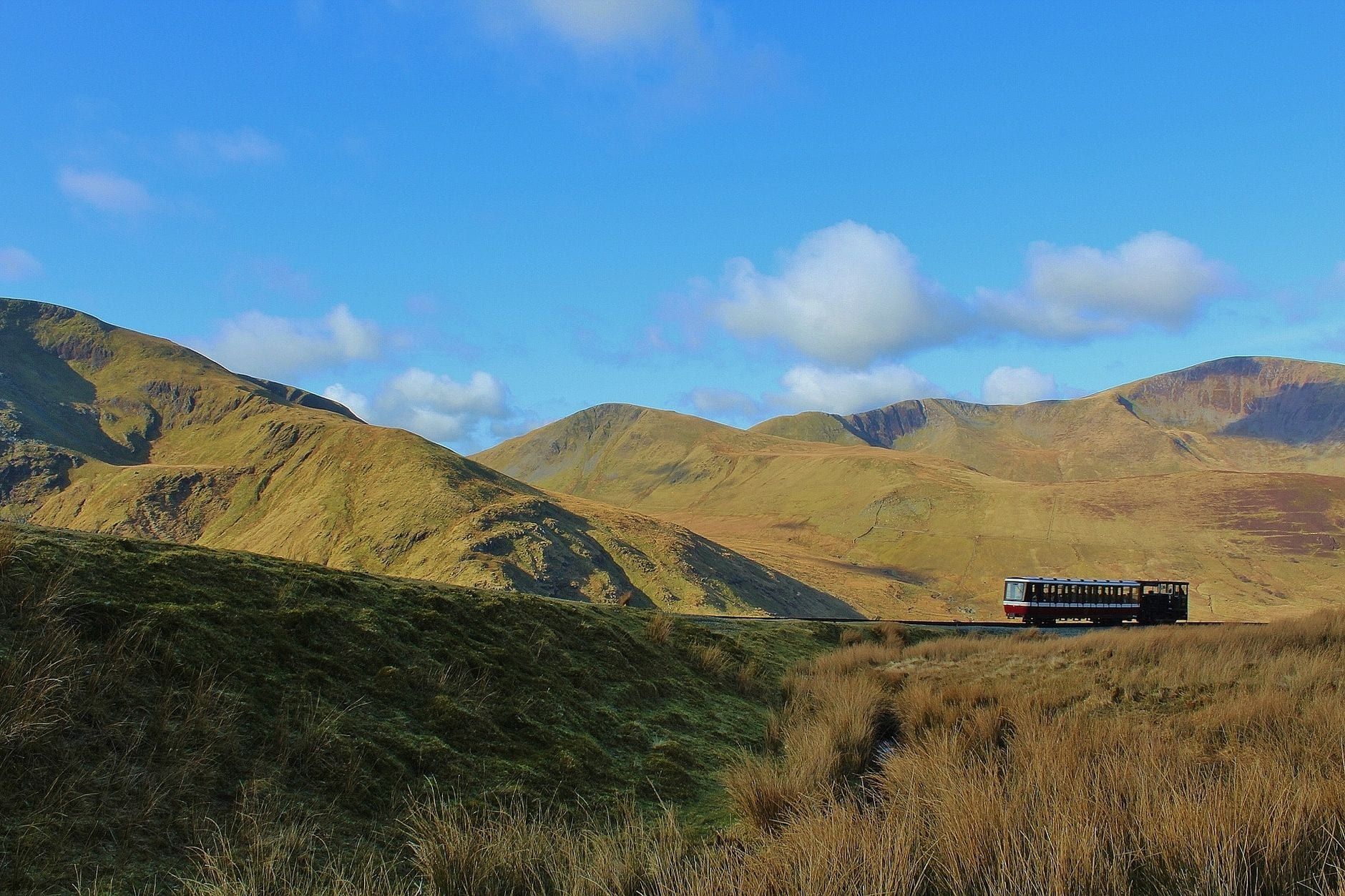
Llanberis keeps its waterfall almost to itself, which is odd given it's a 15-minute walk from the village and the Snowdon Mountain Railway line runs right past it.
5. Ceunant Mawr
Ceunant Mawr — "waterfall of the great ravine" — drops about 30 m in two stages inside a wooded gorge below the Llanberis Path. From the centre of Llanberis it's a 15-minute riverside walk; the nearest parking is the pay-and-display at Dolbadarn Castle (LL55 4TY), which also puts 13th-century castle ruins in your morning.
Photographers get the most from it. The gorge keeps its cool in overcast conditions that suit long exposures of the upper drop, and you can frame the falls with the railway line when a train crosses. What you shouldn't do is swim: people have been injured in the pool below, and the signage says as much.
Quieter Falls and Record-Breakers
South and west of the honeypots the crowds thin out and the stories get better — gold mines, slate quarries, and a drop taller than every "tallest waterfall in Wales" claim you've read.
6. Rhaeadr Ddu (The Black Falls)
An 18 m fall in the mossy gorge of the Coed Ganllwyd Nature Reserve, near the village of Ganllwyd off the A470 — "black falls" for the dark rock and peat-stained water. Park at the National Trust car park and follow the riverside path. The remains of Cefn Coch, worked during the 19th-century Welsh gold rush, sit close enough to loop into a circular walk.
7. Pistyll Cain and Rhaeadr Mawddach
Coed y Brenin Forest Park, better known for mountain biking, hides two falls on its 3.6 km Waterfalls and Goldmines Trail — a moderate circuit past the ruins of the Gwynfynydd Gold Mine. Pistyll Cain drops into a forested gorge; Rhaeadr Mawddach is broader and better in spate. Allow a couple of hours and finish at the trail-centre café.
8. Cwmorthin Waterfall
A chain of cascades down a slate ravine above Blaenau Ffestiniog, framed by the ruins of the Cwmorthin quarry. Parking is free and a few minutes from the falls, which makes this the best wet-weather bet on the list — slate glows when it's wet, and the falls only improve with rain. The quarry buildings are unstable; admire them from the path.
9. The Devil's Appendix
The tallest single drop in Wales, roughly 95 m, hangs in a gully on the cliffs above Llyn Idwal in Cwm Idwal — a title usually, and wrongly, handed to Pistyll Rhaeadr. In dry spells it's a thread; in spate it's a column of water you can hear from the Ogwen road. There's no easy viewpoint: expect a steep hike from the Idwal car park and treat it as a mountain day, not a waterfall stop. Rhaeadr Ogwen, the fall directly below Llyn Idwal's outflow, is the easy option in the same cwm.
Worth the detour: Pistyll Rhaeadr
Strictly speaking it isn't in Snowdonia — the fall sits just outside the park boundary near Llanrhaeadr-ym-Mochnant. But at 73 m over three stages, counted among the Seven Wonders of Wales, it out-dramatises most of the falls that are. Access is by a single-track lane, so go early or go patient, and budget half a day for the round trip from anywhere in the park.
Planning Your Snowdonia Waterfall Trip
Plan around a base. Betws-y-Coed covers Swallow and Conwy Falls in one morning; Llanberis pairs Ceunant Mawr with a Dolbadarn Castle visit; Dolgellau or Ganllwyd suits the southern falls. Deciding where to base yourself in Snowdonia comes before anything else.
When to Go
Flow is strongest in spring or within a day or two of heavy rain; a summer drought can reduce Swallow Falls to a trickle. Summer is also peak season, and the car parks at Aber Falls and Nant Gwynant fill before mid-morning on fine weekends. Late September into early October buys you autumn colour in the gorges and thinner crowds, while winter delivers ice-clad falls on slippery approach paths. Whichever season, arrive early and check the Met Office mountain forecast first.
Costs, Parking and Car-Free Travel
Most of these waterfalls are free to visit — you're paying for parking and two turnstiles.
- Swallow Falls: £2 per person, coins or contactless (October 10am–3pm)
- Conwy Falls: £1.50–2 per person; café car park free
- Aber Falls: free entry; £5 all-day car park
- Watkin pools, Ceunant Mawr, Rhaeadr Ddu, Cwmorthin: free; parking charges vary
Car-free travel is possible but lumpy. Betws-y-Coed has a railway station on the Conwy Valley Line, and Swallow Falls is a two-mile walk from it; the Sherpa 'r Wyddfa S4 bus serves Pont Bethania for the Watkin pools (£5.50 for a day ticket). Aber Falls is the awkward one — the journey from Bangor takes a line 5 bus plus a taxi, roughly 32 minutes and £22–28. For the full picture on trains, buses and driving routes, see our guide to how to get to Snowdonia.
Dogs, Kit and Staying Safe
Dogs on leads are welcome on virtually all of these walks; the real hazards are slippery rock, gorge edges and livestock on the approach lanes. Wear boots with proper grip — twisted ankles are among the most common injuries in the park — and pack waterproofs even when the forecast looks dry, because the rain that fills the falls arrives without much notice. Never swim within a day of heavy rain, and skip the water entirely at Swallow Falls and Ceunant Mawr. Several of these sites are SSSIs: stick to the paths, leave the salmon ladder at Conwy Falls undisturbed, and carry your litter home.
FAQs: Snowdonia Waterfalls
Can you swim at Snowdonia's waterfalls?
Yes at the Watkin Path pools and Aber Falls' plunge pool — both deep and cold, with slippery rocks underfoot. No at Swallow Falls (strong currents) or Ceunant Mawr (previous injuries), and never anywhere within a day of heavy rain, when undercurrents can pull swimmers under.
What is the most famous waterfall in Snowdonia?
Swallow Falls — a 42 m cascade system on the Afon Llugwy, two miles from Betws-y-Coed and a filming location for Wonder Woman 1984. Aber Falls is the most visited waterfall in the park.
How much does it cost to visit the waterfalls?
Most are free. Swallow Falls charges £2 per person through its turnstile (coins or contactless), Conwy Falls costs £1.50–2, and Aber Falls is free to enter with £5 all-day parking. The Watkin pools and Ceunant Mawr are free, with pay-and-display or national-park parking charges.
When is the best time to see Snowdonia's waterfalls?
Spring or within a day of heavy rain for maximum flow, late September into early October for autumn colour and quieter paths. Summer brings crowds and low water; winter brings ice and slippery approaches. Popular car parks fill early in peak season.
Are the waterfall walks pushchair and wheelchair friendly?
Aber Falls' 2 km compacted-gravel path is pushchair-friendly. Swallow Falls' viewing platforms are accessible April to October, though steps lead to the lower sections; Conwy Falls' natural gorge paths aren't suitable for buggies.
Are Snowdonia's waterfalls dog-friendly?
Yes — dogs on leads are welcome on virtually all of these walks, including Aber Falls and Conwy Falls. Keep leads on near livestock, gorge edges and wet rock.
Can you visit Snowdonia's waterfalls without a car?
Partly. Betws-y-Coed's railway station puts Swallow Falls within a two-mile walk, and the Sherpa 'r Wyddfa S4 bus serves Pont Bethania for the Watkin pools. Aber Falls from Bangor takes a line 5 bus plus a taxi — about 32 minutes and £22–28.
What is the tallest waterfall in Snowdonia?
The Devil's Appendix in Cwm Idwal, at roughly 95 m — the tallest single drop in Wales, reached on a steep hike. Pistyll Rhaeadr (73 m over three stages) often gets the title, but it lies just outside the park boundary.