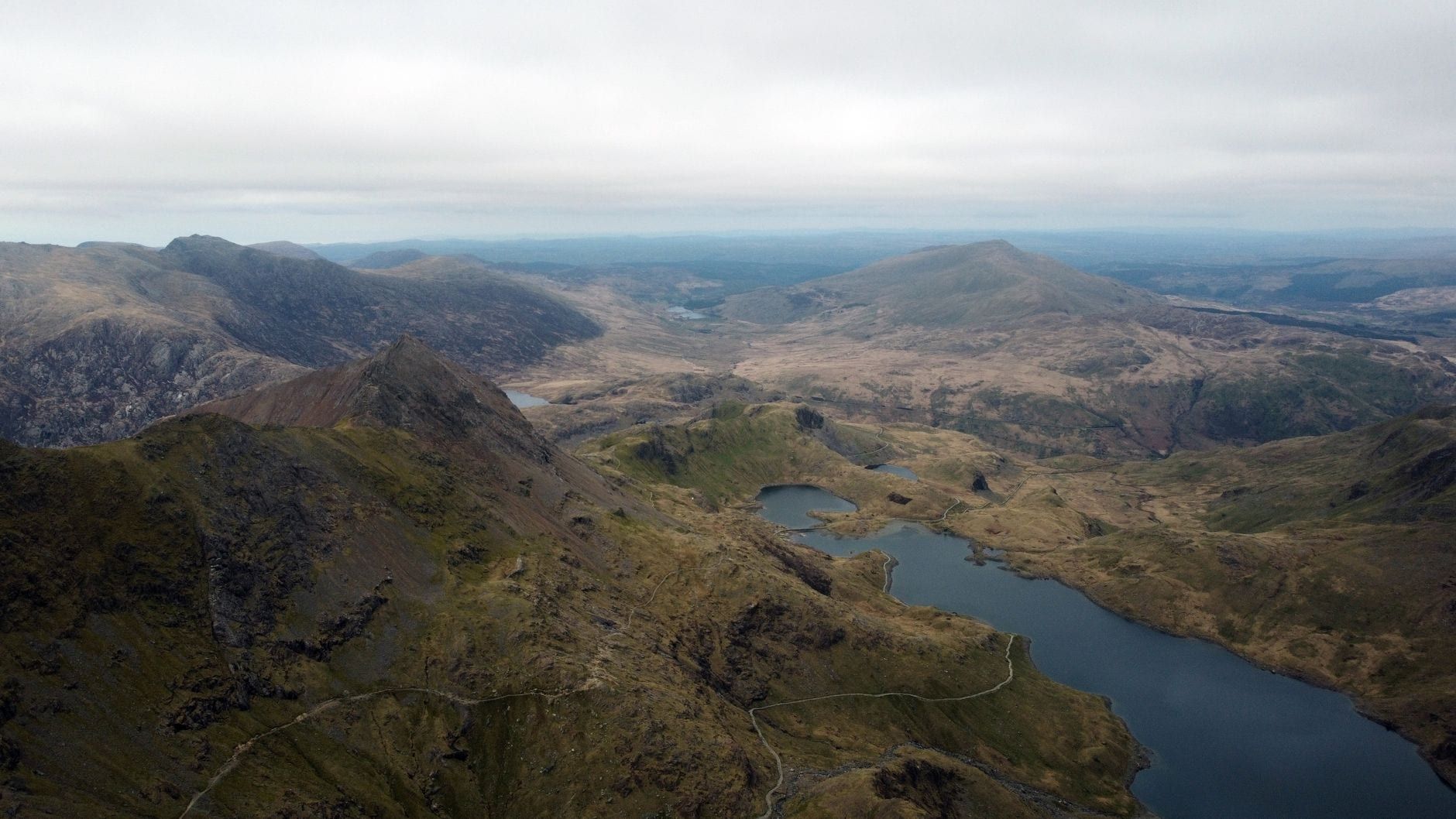
Eryri (Snowdonia) National Park squeezes nine mountain ranges, 74 miles of coastline and 1,497 miles of walking routes into 823 square miles of northwest Wales. It's the country's largest park, its first — designated in 1951 — and home to Yr Wyddfa (Snowdon), at 1,085 m the highest summit in England and Wales. Nearly four million people visit every year, most of them for the mountain, and then find everything else by accident: Edward I's castles, a Victorian summit railway, slate caverns you can bounce around in, and the fastest zip line on the planet.
This guide covers the lot, with the prices, timings and booking traps that most lists leave out. It assumes a first visit of three to five days and a preference for knowing what things cost before you arrive.
Planning your trip: when to go, how long, getting around
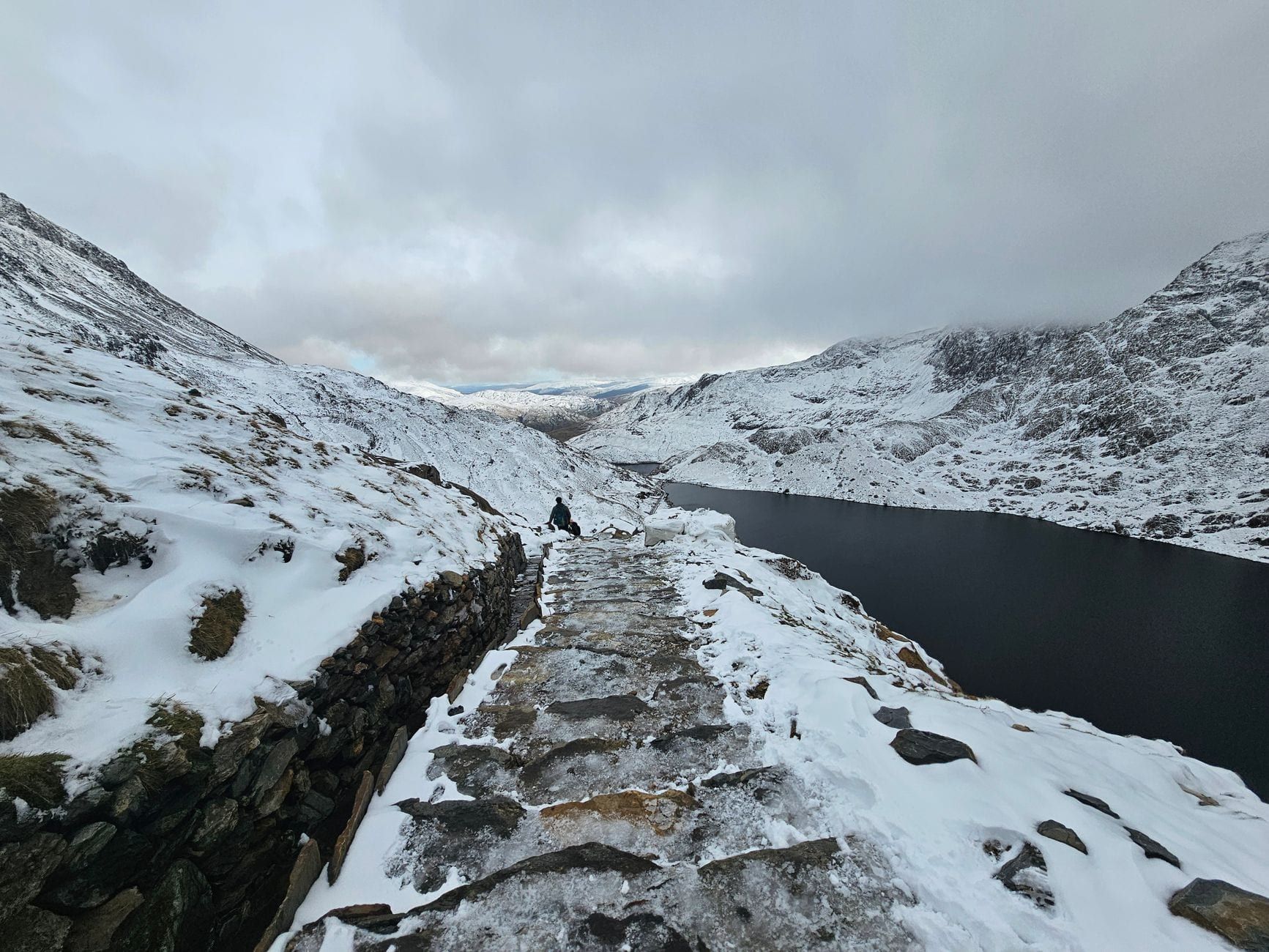
Go between May and September, when all six summit routes and the railway run and daylight runs long. June and September are the connoisseur's months — comparable weather to the school holidays with a fraction of the crowds, and late September adds autumn colour to the trails. November to February is the hard stretch: the railway's last diesel service of the season runs on 1 November, midwinter daylight shrinks to under eight hours, and snow and ice close in on the summits. If you're planning around winter conditions, our piece on Snowdonia in winter covers what still works.
Summer itself is cooler than people expect — 17–19°C on average, with rain arriving in every month (August averages around 14 rainy days). Pack a waterproof in July. And the park itself is free to enter, open 24/7, with no permits to walk anywhere; our rundown of opening hours and entry fees covers the things that do cost money.
Getting around is easiest by car — under two hours from Manchester or Liverpool, about 2.5 from Birmingham — but trains reach the edge of the park: direct from London Euston to Bangor in roughly 3 hours 20 minutes (if you're travelling from London, advance fares beat the £85.20 off-peak walk-up), or the Conwy Valley Line from Llandudno Junction to Betws-y-Coed in 1 hour 25. Full route detail is in our guide on how to get to Snowdonia. Inside the park, the Sherpa'r Wyddfa buses (S1–S4) link Bangor, Betws-y-Coed, Llanberis, Pen-y-Pass, Beddgelert and Porthmadog for £5.50 a day, contactless, dogs welcome.
For a first visit, three to five days is the sweet spot — enough for one big mountain day, a village, a castle and a waterfall or lake without rushing. Where you base yourself shapes the trip, and where to stay in Snowdonia comes down to three realistic candidates:
| Base | Character | Best for |
|---|---|---|
| Betws-y-Coed | Busy gateway village on the Conwy Valley Line; the most shops, cafés and beds | First-timers and families |
| Llanberis | Mountain-railway town on Llyn Padarn; railway, Slate Museum and lake all walkable | Summit-focused trips |
| Beddgelert | Small stone village on the Afon Glaslyn; the quietest of the three | Slower trips, southern walks |
Evenings are part of the plan. Sunset from Llyn Padarn or the Ogwen Valley is worth staying out for, and once the light goes, the skies away from the villages are dark enough for serious stargazing — time your summit descents so you're never caught out after dark instead.
Climbing Yr Wyddfa (Snowdon)
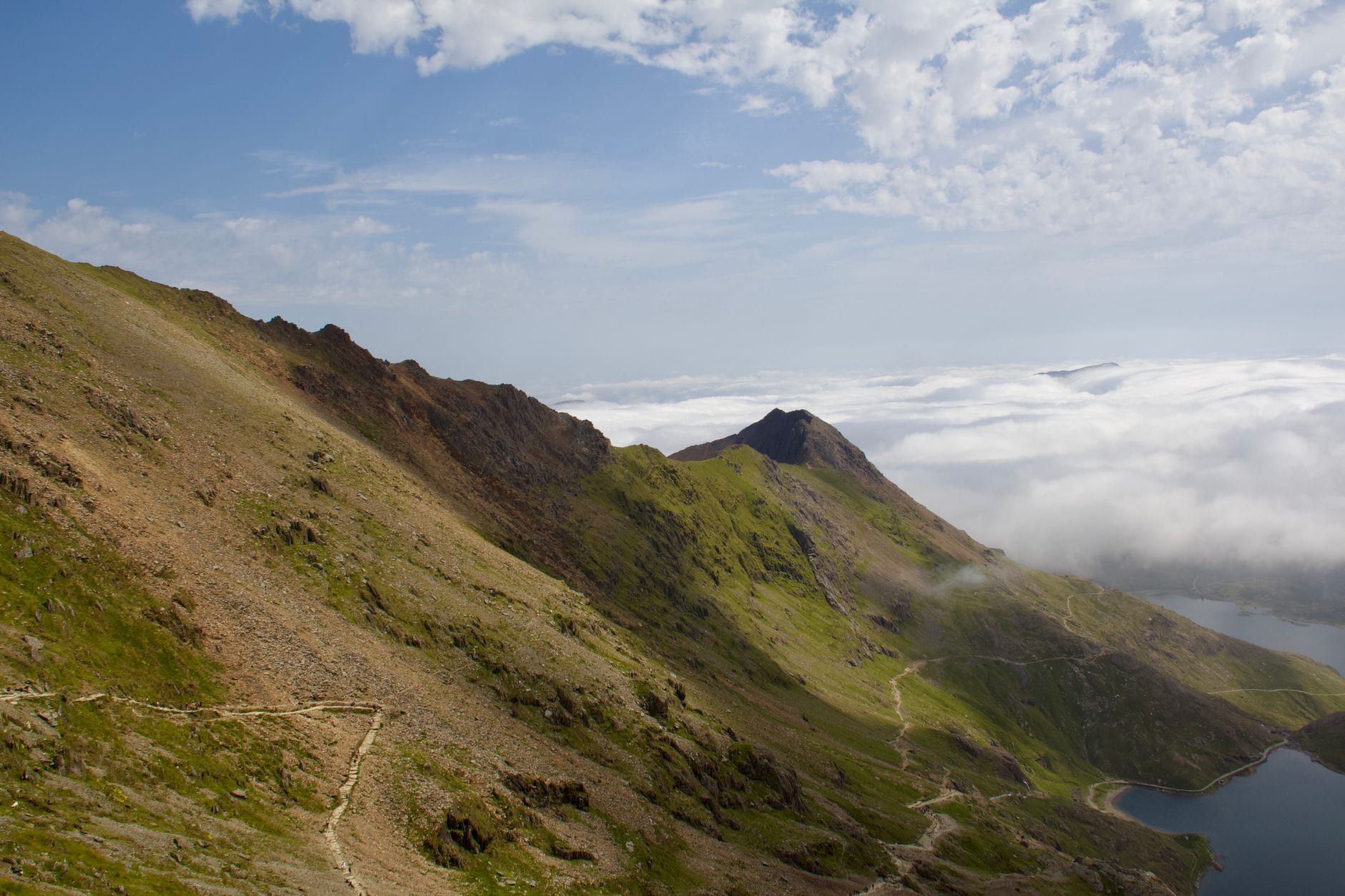
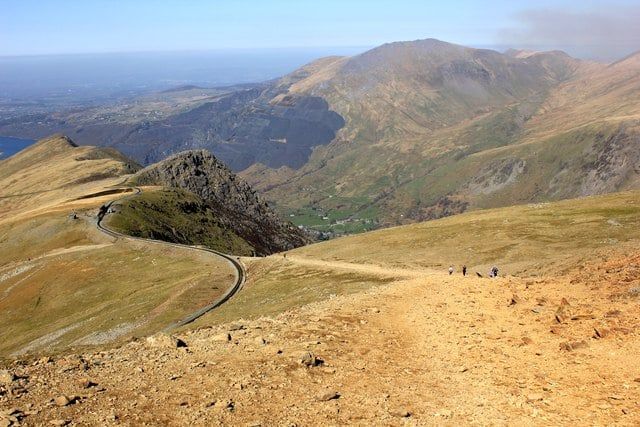
Yr Wyddfa stands 1,085 m tall with six main walking routes to the top, all of them classed as hard or strenuous by Visit Wales — this is a mountain, not a hillwalk, and more than 600,000 people a year prove it's doable with honest preparation. Most need 6–8 hours for the round trip. The four most popular paths:
| Route | Time up | What it's like |
|---|---|---|
| Llanberis Path | 2½–4 h | Longest and gentlest (9 mi round trip); shadows the railway |
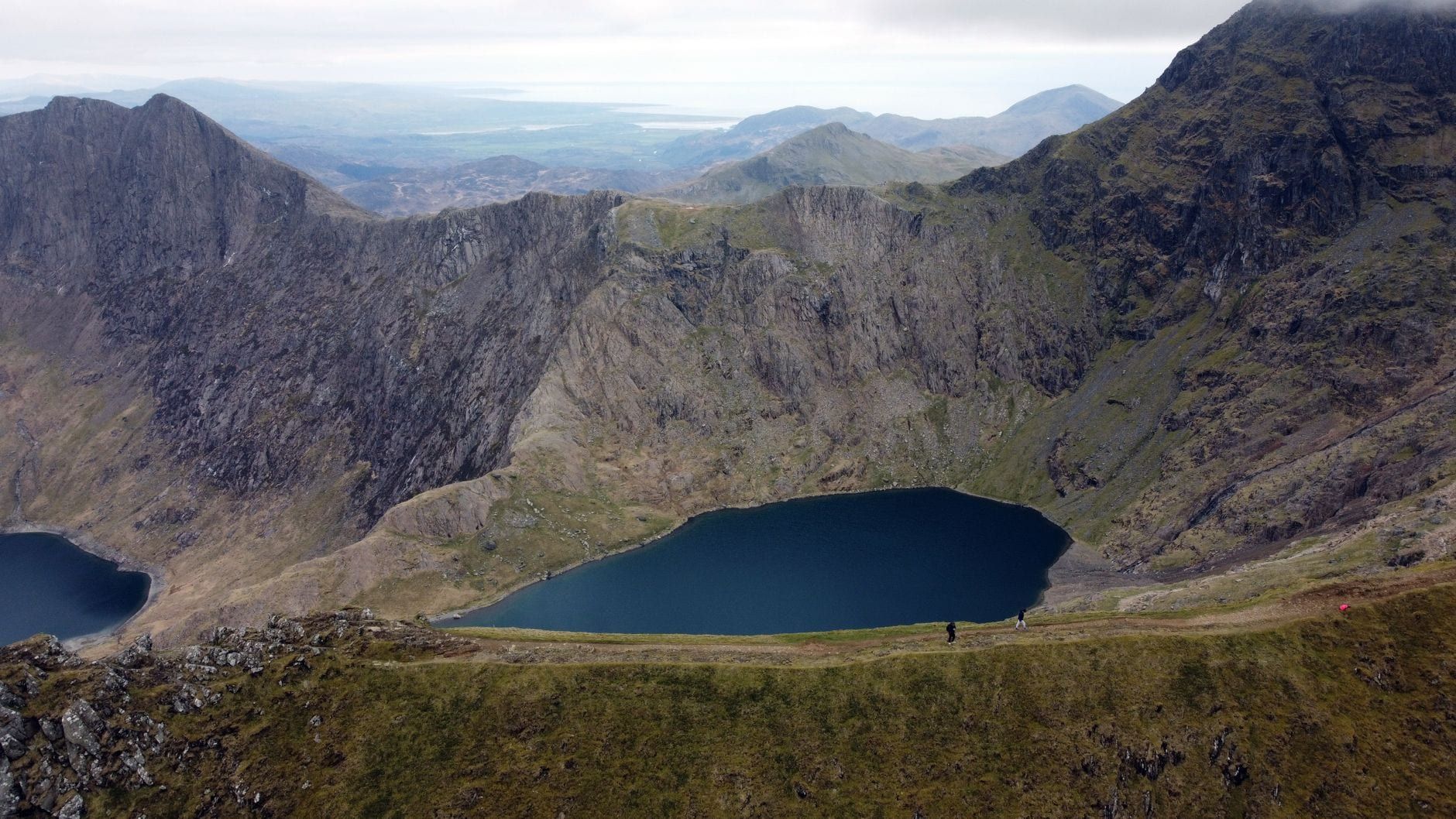
| Pyg Track | 1¾–3 h | Rugged and stepped, with views over Llyn Llydaw |
| Miners' Track | 2½–3½ h | Gentle lakes start, steep final climb above Glaslyn |
| Snowdon Ranger | 2¼–3 h | Quieter and similar in effort to Llanberis |
The classic combination is the Pyg Track up and the Miners' Track down — two different walks from the same Pen-y-Pass trailhead, both passing the corrie lakes. Start before 8am: you'll beat the queues on the stepped sections and the afternoon scrum at the top. The Watkin Path from Nant Gwynant is the toughest of the six, and rewards the effort with waterfalls and clear pools on its lower section. More route detail is in our guide to Snowdonia's hikes.
Parking is the part that catches people out.
For experienced scramblers, Crib Goch is the big prize: a knife-edge ridge east of the summit that demands a sure head and dry rock — it kills people most years, so it's a route for confident, equipped walkers only. Beyond the massif, Tryfan's east face and the Devil's Kitchen above Cwm Idwal are the classic scrambles covered below. Whatever you attempt, check the Met Office mountain forecast first: gusts over 50 mph can blow you off your feet, and conditions on the top can be 15°C colder than Llanberis.
Snowdon Mountain Railway & Wales' heritage trains
Yes, you can take a train to the top. The Snowdon Mountain Railway has been hauling visitors from Llanberis to the summit since 1896 and remains Britain's only public rack-and-pinion railway. The return takes about 2.5 hours — roughly an hour up, 30 minutes at Hafod Eryri (the UK's highest visitor centre, where you can post a card from the summit post box), an hour down. Diesel returns cost £45 adult off-peak, £48 peak, children £35–£38; the Heritage Steam Experience, on original Swiss locomotives, is £62. There's a £4 fee per advance booking, and it's worth every penny of it: in fine-weather spells the railway sells out weeks ahead.
First departure is 9am, then every 30 minutes or so; arrive an hour early — latecomers can't be accommodated — and use the toilets before boarding, as there are none on the train. It's the right call for anyone with limited mobility (diesel carriages carry one wheelchair — call ahead), young children, or mixed-ability groups where some want to walk and others don't. One catch: a return ticket is only valid boarding at Llanberis, so you can't hike up and ride down on it.
The heritage lines around the park are attractions in their own right. The Ffestiniog Railway, opened in 1836, is the oldest independent railway company in the world, running 13.5 miles from Porthmadog to Blaenau Ffestiniog through the heart of the slate country; the Welsh Highland Railway continues from Porthmadog to Caernarfon beneath Yr Wyddfa itself. Both celebrate with a beer festival each May. The Talyllyn Railway from Tywyn — the world's first preserved narrow-gauge line — runs past Dolgoch Falls, and the little Llanberis Lake Railway trundles beside Llyn Padarn from the village. Any of them rescues a damp afternoon.
Beyond Snowdon: Glyderau, Cadair Idris & Cwm Idwal
The park holds all fifteen Welsh mountains over 3,000 ft, and the best walking isn't all on Yr Wyddfa.
The Cwm Idwal and Llyn Idwal loop
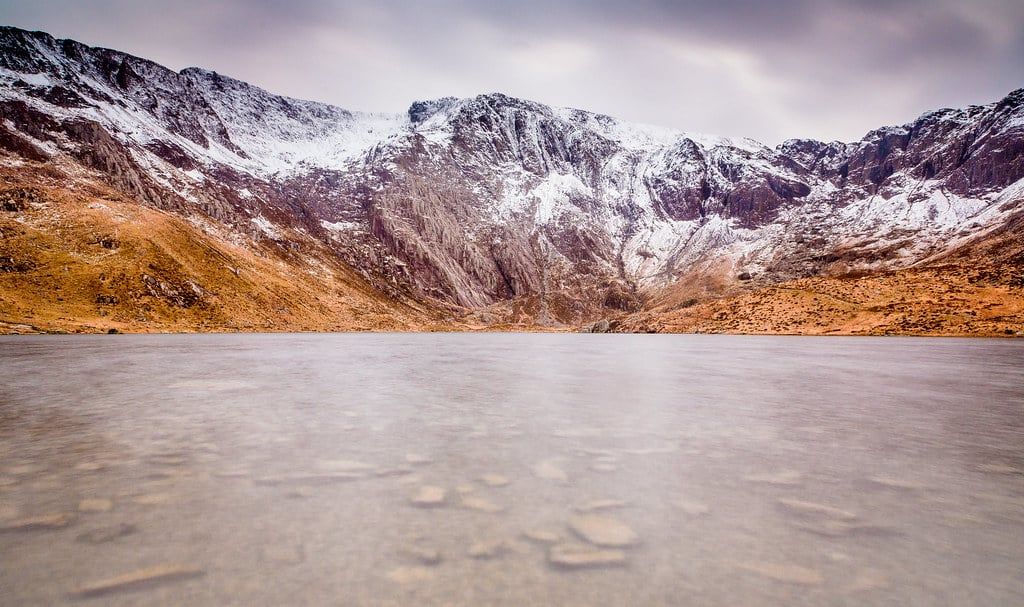
This short loop around a glacial lake beneath the Glyderau is the best easy walk in the park — dramatic cliffs, black water, and under an hour of effort from the car park at Ogwen Cottage, a National Trust outdoor centre. In summer, arrive before mid-morning or the parking fills. The surrounding walls are popular with climbers, and the Devil's Kitchen — the dark cleft above the lake — is the area's signature scramble.
Cadair Idris
At the park's southern end, Cadair Idris is the quieter southern giant — steep from whichever side you attack it, and far less busy than anything on the Snowdon massif. Legend says a night spent on its summit leaves you either a poet or a madman; most day-trippers settle for the views over the Mawddach estuary. Allow a full day.
The Ogwen Valley and the Glyderau
The Ogwen Valley is Eryri's mountaineering hub — a single road beneath walls of rock, with Tryfan the rough diamond in the middle. Its south ridge is the most popular scramble in Wales, finishing with the famous Adam and Eve summits. On Glyder Fach, Castell y Gwynt is a jumble of balanced boulders that looks like a giant's abandoned game; it's 20 minutes off the main path and worth every one.
Waterfall walks
Aber Falls (Rhaeadr Fawr) drops 37 m at the park's northern edge, reached on a round trip of about 1 hour 15 minutes — a genuine walk rather than a viewpoint. Closer to Betws-y-Coed, Swallow Falls and Conwy Falls both charge admission but sit minutes from their car parks, which makes them reliable half-day fillers when the weather clears. We cover these and more in our guide to Snowdonia's waterfalls.
Villages: Betws-y-Coed & Beddgelert
Two stone villages anchor most Snowdonia itineraries, with a third — Portmeirion — doing something entirely different.
Betws-y-Coed
Victorian artists came here in the 19th century, founding Britain's first artists' colony, and the railway followed in 1868. Today it's the park's gateway, strung along the River Llugwy: cross Pont-y-Pair, the 15th-century bridge in the village centre, walk down to the dark gorge of the Fairy Glen, or head into Gwydir Forest on waymarked trails straight from the village. The National Park Information Centre (daily 9.30am–5pm) sells maps and advises on routes. Nearby Llanrwst hides Tu Hwnt i'r Bont, a 15th-century tearoom under a turf roof and one of the most photographed buildings in North Wales.
Beddgelert
Beddgelert means "Gelert's Grave", and the stone monument to Llywelyn the Great's faithful hound — killed by his master in a case of mistaken identity about a wolf — sits a short riverside stroll from the village centre. The Gelert's Grave circular is a family favourite. Beyond the legend, this is the prettiest base in the park: the Afon Glaslyn runs through it, ice cream from the Glaslyn shop is a fixed ritual, and the road south past Llyn Gwynant is one of the finest in Wales.
Llanberis
The third base, and the practical one: the Mountain Railway, the National Slate Museum and Llyn Padarn are all walkable from the town. The Llanberis Path starts here too, and the village shop occupies the railway's original 1896 booking hall.
Portmeirion
Sir Clough Williams-Ellis spent 50 years building this Italianate village on its own peninsula above the Dwyryd estuary, inspired by Portofino — riotously coloured façades, arches and gardens that feel absurd, then irresistible. It's a paid-entry attraction (prices change often, so check the official site) and served as the filming location for the 1960s series The Prisoner. Allow half a day, and pair it with the beaches at Black Rock Sands or Harlech.
Castles of Eryri
Fourteenth-century English power and thirteenth-century Welsh defiance are both built in stone around this park, and you shouldn't leave without seeing one of each.
Harlech Castle
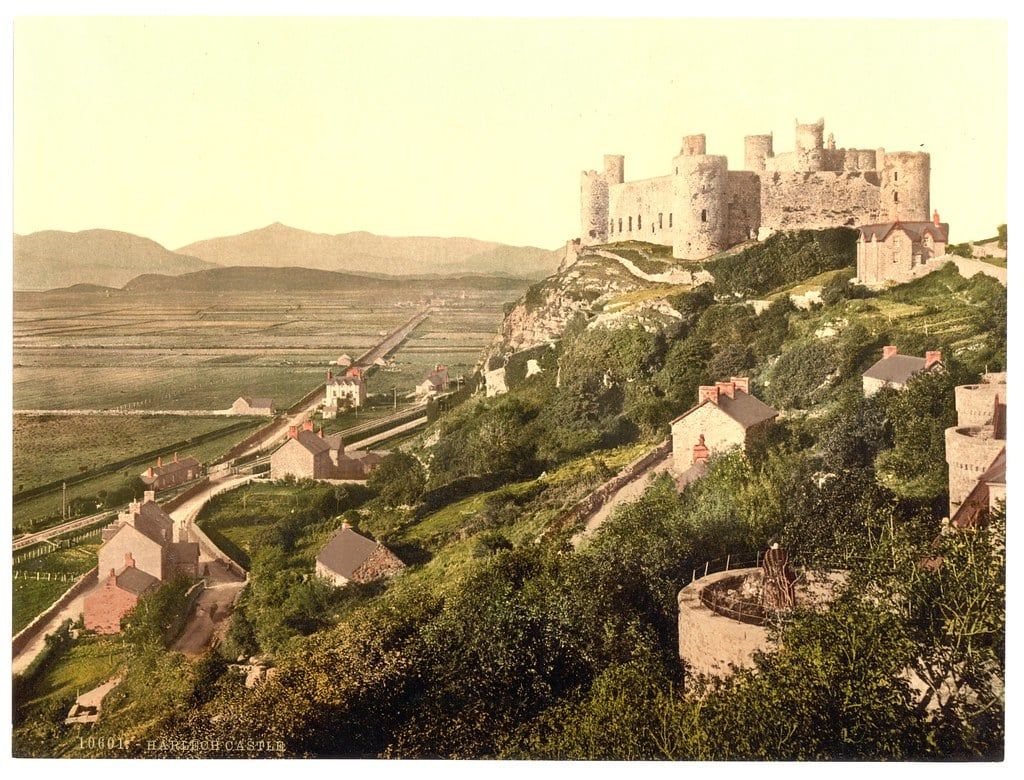
Edward I built Harlech in seven years in the 1280s, a concentric fortress on a rock pinnacle above Tremadog Bay — part of the UNESCO-listed Castles and Town Walls of King Edward in Gwynedd. The "Way from the Sea" stairway climbs 200 feet from the old harbour to the gates, and the views take in the whole Cardigan Bay coast. Combine it with the beach below; both are free to walk.
Caernarfon and Conwy
The two heavyweights sit just outside the park boundary and are worth the detour. Caernarfon's polygonal towers and Eagle Tower dominate the Menai Strait — entry £14.90 adult, £47.70 for a family, and most people spend up to two hours on the walls. Conwy, 25 minutes east, is the most complete of the group, with its town walls attached. If you only see one castle in North Wales, make it Caernarfon; if your party contains small children, Conwy's compact circuit is the easier sell.
Dolwyddelan and Castell y Bere
The native Welsh castles are the insiders' picks. Dolwyddelan, built by Llywelyn the Great in the early 13th century, guards the Lledr valley on the road to Blaenau Ffestiniog — free to visit, with the exterior open daily and the interior only a few days a week. Castell y Bere, in the hills south of Cadair Idris, was the last Welsh castle to fall to the English; its remote ruins see a fraction of Harlech's crowds. Photographers should head to Bere; anyone wanting tea shops afterwards, Harlech.
Slate heritage: National Slate Museum & Llechwedd
Wales produced over 80% of Britain's slate, and in 2021 the slate landscape of northwest Wales joined the UNESCO World Heritage list. The quarries are Snowdonia's second identity, and several are now attractions.
National Slate Museum, Llanberis
At the foot of the old Dinorwig Quarry, this free museum works the valley's industrial past: original quarrymen's houses, live demonstrations and the vast workshops where the rock was split and dressed. It's the best rainy-day anchor in the park, an hour covers it well, and it's five minutes' walk from Llanberis lake.
Llechwedd Slate Caverns, Blaenau Ffestiniog
The Deep Mine Tour at Llechwedd takes you underground into the Victorian workings by train and on foot, with the whole historic quarry village above — the same site that now hosts Zip World's attractions, so one parking ticket covers a full day out. The Ffestiniog Railway terminates up the road, which makes an easy train-plus-mine pairing.
Sygun Copper Mine and self-guided caverns
Near Beddgelert, Sygun Copper Mine runs a 40-minute self-guided underground tour through caverns and tunnels at your own pace — a good pick with children, who like the darkness more than most adults do. Llanfair Slate Caverns near Harlech is the similar alternative. Then there's the free option: the terraced galleries of Dinorwic Quarry above Llanberis, one of the most photogenic man-made landscapes in Britain.
Adrenaline: Zip World, underground adventures & surfing inland
North Wales has quietly become one of the world's odder adventure-sports destinations, and most of it is clustered at old quarry sites around the park's edges. You can compare guided tours and adventure days for the logistics; here's what's on offer.
Zip World
Velocity 2 at Penrhyn Quarry near Bethesda is the headline act: the fastest zip line in the world and the longest in Europe, four riders side by side at over 100 mph across roughly 1,600 m of line above the quarry's turquoise lake. It lasts 90 seconds and costs accordingly — book the first slot of the day for the calmest air. Quarry Karts at the same site let you ride the slate terraces downhill on purpose-built karts. At Llechwedd, Zip World Titan sends seated flyers across the quarry on multiple lines, and the Caverns course runs rope bridges and zip wires through the underground workings.
Underground adventures: Bounce Below and Go Below
Bounce Below is the family crowd-pleaser: giant trampoline nets strung between slate cavern walls at Llechwedd, lit in shifting colours, with bigger jumps for older kids in the deeper chamber. Go Below, near Betws-y-Coed, is its serious sibling — 5 to 7 hours of abseiling, zip lines and boat crossings through old mine workings, reaching around 1,300 ft underground, Britain's deepest accessible point. Book either well ahead in school holidays.
Inland surfing and white water
Adventure Parc Snowdonia generates waves on a 300 m inland lagoon roughly every 70–90 seconds, graded from beginner foam to advanced walls — a surf session whatever the ocean is doing, and lessons for complete novices. For moving water, the National White Water Centre near Bala runs about two hours of rafting on a one-mile stretch of the River Tryweryn, dam-released from Llyn Celyn so it runs even in dry spells. Canyoning and gorge-walking outfits around Betws-y-Coed fill the gap between the two.
Mountain biking at Coed y Brenin
Coed y Brenin, in the park's south, was the first purpose-built mountain bike centre in the UK and now runs around 90 miles of singletrack, from the 5-mile green Yr Afon to the 24-mile black Beast of Brenin, with hire on site. Antur Stiniog at Blaenau Ffestiniog is the downhill option, uplift-served. A word on wet days: everyone who planned a hike moves to these attractions when it rains, so what was quiet on Monday is booked out by Wednesday.
Lakes, waterfalls & wild swimming
Over 250 lakes sit inside the park boundary, and on a still evening the swimming is better than the walking.
Llyn Padarn
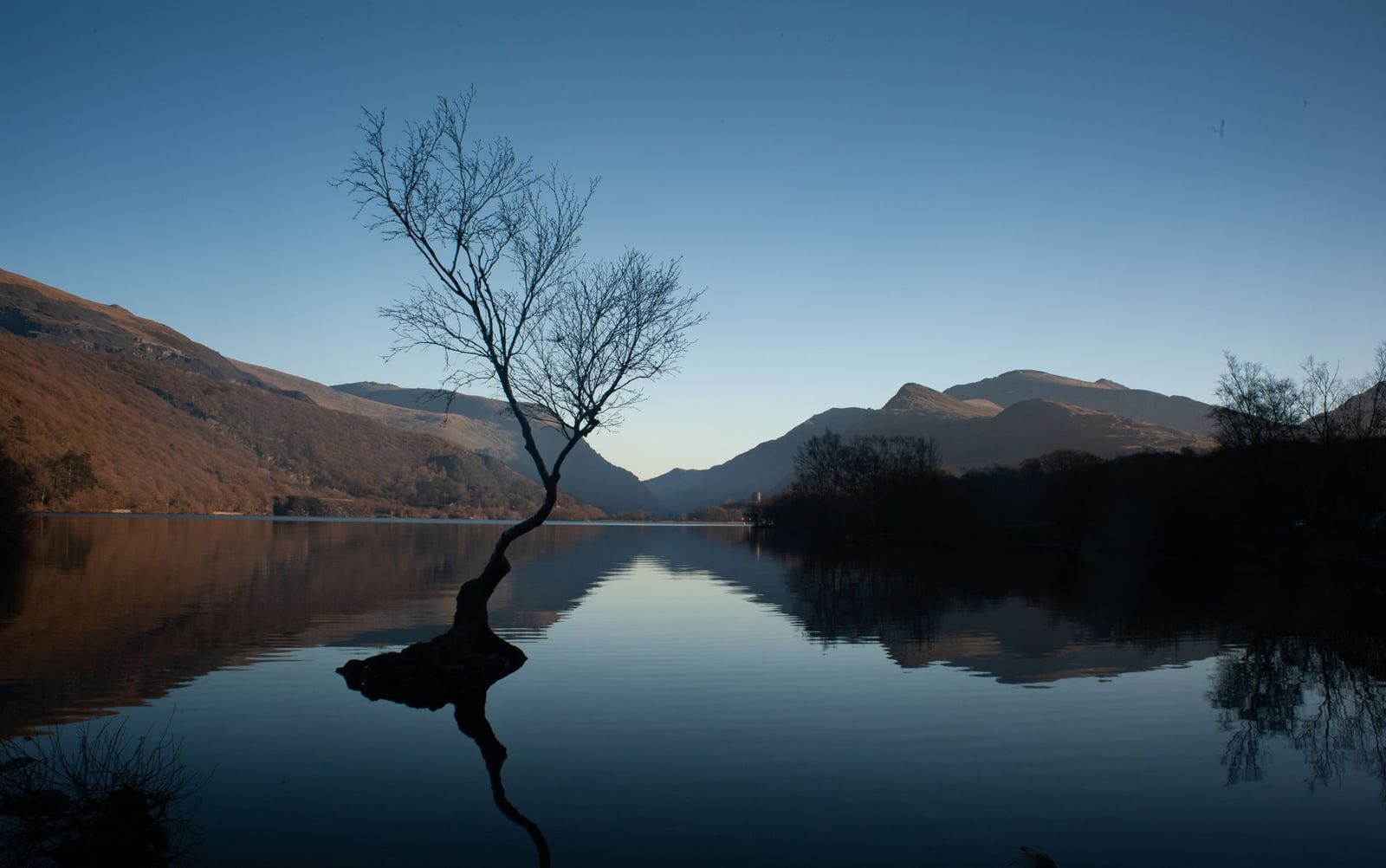
Llanberis's lake is one of the largest natural lakes in Wales, with Padarn Country Park along its shore and kayak and paddleboard hire from around £25 for two hours. The lakefront path is flat and pushchair-friendly, and the view down the water towards Snowdon is the one on all the postcards.
Llyn Dinas and Llyn Gwynant
Further south, sheltered beneath the massif, Llyn Dinas and Llyn Gwynant are the locals' swimming and paddling lakes — calm, surprisingly warm by August, with mountain reflections that make the getting-in worth it. There's a campsite right on Gwynant, which does wonders for an early start on the Watkin Path.
For waterfalls, Swallow Falls near Betws-y-Coed is the longest continuous waterfall in Wales (paid entry, minutes from the car park), Conwy Falls is its neighbour over the river, and the Fairy Glen gorge is the free wild option. All three are better after rain — which is to say, usually. On the park's coastal edge, 74 miles of shoreline run past Aberdyfi and Barmouth if you want a beach day folded into the trip.
Rainy-day planning & FAQs
It rains in North Wales — around 14 rainy days in an average August, and most of the annual total falling between October and January. Plan for rain rather than hoping against it, and the trip improves immediately. The undercover shortlist, roughly in order of value:
- National Slate Museum, Llanberis — free, an hour, walkable from the village
- Llechwedd Deep Mine Tour, Blaenau Ffestiniog — 10°C underground, bring a layer
- Bounce Below, same site — trampolines in a slate cavern
- King Arthur's Labyrinth, Machynlleth — seasonal underground boat ride, roughly 10am–4.45pm
- Sygun Copper Mine, Beddgelert — 40-minute self-guided tour
- Corris Craft Centre or a Talyllyn Railway round trip further south
If the rain eases rather than clears, waterfalls are the move — they're at their best in wet weather — as are the steam railways and castle interiors, which are covered walks with walls. And the villages' cafés and pubs are the honest answer to a washed-out afternoon: Betws-y-Coed has the most choice, Beddgelert the best fires.
Frequently asked questions
Is climbing Snowdon (Yr Wyddfa) difficult?
Hard but achievable with decent fitness. All six routes are graded hard/strenuous, and a round trip takes 6–8 hours. The Llanberis Path is the gentlest; the classic plan is the Pyg Track up and the Miners' Track down, starting before 8am to beat the crowds.
How much does the Snowdon Mountain Railway cost, and how long does it take?
The return takes about 2.5 hours, including 30 minutes at the summit. Diesel returns cost £45 adult off-peak and £48 peak (£35–£38 for children aged 3–15); the steam experience is £62. Book online in advance — a £4 fee applies — as summer services can sell out weeks ahead.
What is the fastest zip line in the world, and where is it?
Zip World Velocity 2 at Penrhyn Quarry near Bethesda — the fastest zip line in the world and the longest in Europe, reaching over 100 mph on roughly 1,600 m of line above the quarry lake.
What is Bounce Below, and where is it?
An underground trampoline park inside the old Llechwedd slate caverns at Blaenau Ffestiniog — giant nets strung between the cavern walls. The same site hosts the Deep Mine Tour and Zip World Titan.
What can you do in Snowdonia when it rains?
The National Slate Museum in Llanberis (free), the Llechwedd Deep Mine Tour, Bounce Below, King Arthur's Labyrinth's underground boat ride, Sygun Copper Mine, and the cafés of Betws-y-Coed or Beddgelert. Waterfalls are also at their best in wet weather.
How many days do you need in Snowdonia?
Three to four days covers the core: one mountain day, a village, a castle and an adventure activity. Five days adds the coast and a second big walk without rushing.
When is the best time to visit Snowdonia?
May to September, for the longest days and the best chance of summit weather — June and September have fewer crowds than July and August. Expect summer averages of just 17–19°C, and rain in any month.
Where should I stay in Snowdonia — Betws-y-Coed or Beddgelert?
Betws-y-Coed for the widest choice of shops, restaurants and accommodation, on the railway; Llanberis if the summit (by path or train), the Slate Museum and the lake are your priorities; Beddgelert for somewhere smaller and quieter with the Nant Gwynant walks on the doorstep.
Sources
- eryri.gov.wales/
- eryri.gov.wales/visit/snowdon/
- snowdonrailway.co.uk/plan-your-visit
- museum.wales/slate/
- cadw.gov.wales/visit/places-to-visit/dolwyddelan-castle
- cadw.gov.wales/visit/places-to-visit/castell-y-bere
- cadw.gov.wales/visit/places-to-visit/castell-caernarfon
- festrail.co.uk/
- talyllyn.co.uk/
- portmeirion.wales/
- syguncoppermine.co.uk/
- go-below.co.uk/
- nationalwhitewatercentre.co.uk/
- adventureparcsnowdonia.com/
- kingarthurslabyrinth.co.uk/
- nationaltrust.org.uk/visit/wales/ogwen-cottage/outdoor-centre-at-ogwen-cottage
- visitwales.com/things-do/adventure-and-activities/walking/walking-yr-wyddfa-wale
- en.wikipedia.org/wiki/Snowdonia