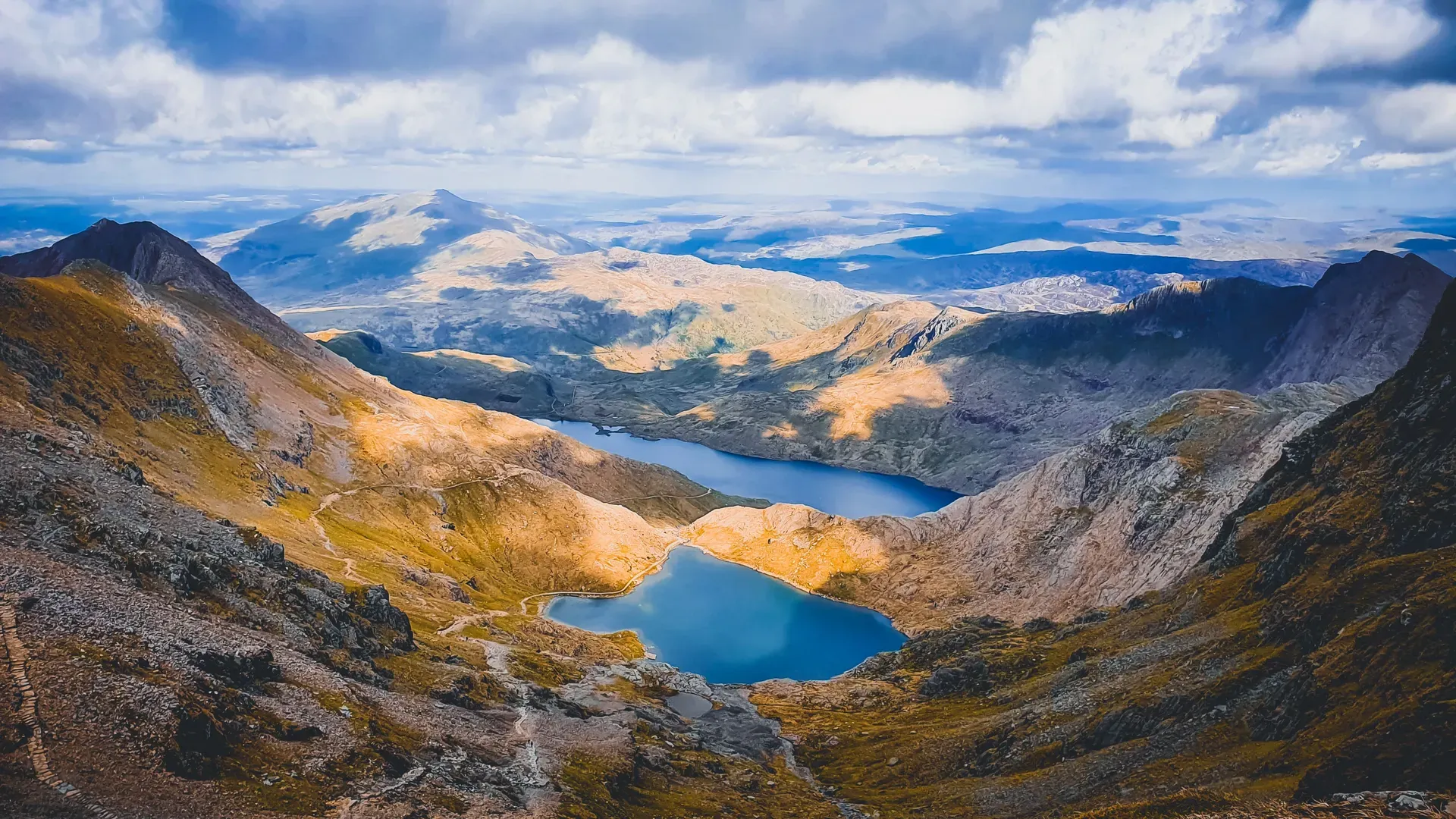
Eryri (Snowdonia) National Park covers 823 square miles of northwest Wales, anchored by Yr Wyddfa — at 1,085 m, the highest peak in Wales and England. Designated in 1951, it was Wales' first national park and remains home to 26,000 people, most of whom speak Welsh daily.
Eryri (Snowdonia) National Park covers 823 square miles of northwest Wales, spread across Gwynedd and Conwy — the largest national park in the country. At its heart rises Yr Wyddfa (Snowdon), 1,085 m high and the tallest point in Wales and England. Nine mountain ranges, 74 miles of coastline and 11,000 hectares of native woodland sit inside the boundary, along with working villages like Betws-y-Coed and Beddgelert where Welsh is still the language of the shop counter.
Designated on 18 October 1951, Eryri was the first national park in Wales and the third in the UK. Nearly 4 million people visit each year, and over 600,000 of them walk up Yr Wyddfa alone. The rest come for the Victorian rack railway that has carried passengers to the summit since 1896, for slate mines, glacial lakes, river gorges and 1,497 miles of walking routes.
There is no entrance fee, no gate and no booking required to walk anywhere in the park, which is open 24/7 year-round. What you pay for is parking (£5–£45 a day), the summit railway (£26–£62) and attractions such as Caernarfon Castle or Zip World. Allow three to five days to see the place properly; a one-day drive through Betws-y-Coed and Llanberis is possible, but rushed. And whatever the month, pack a waterproof — August alone averages around 14 rainy days.
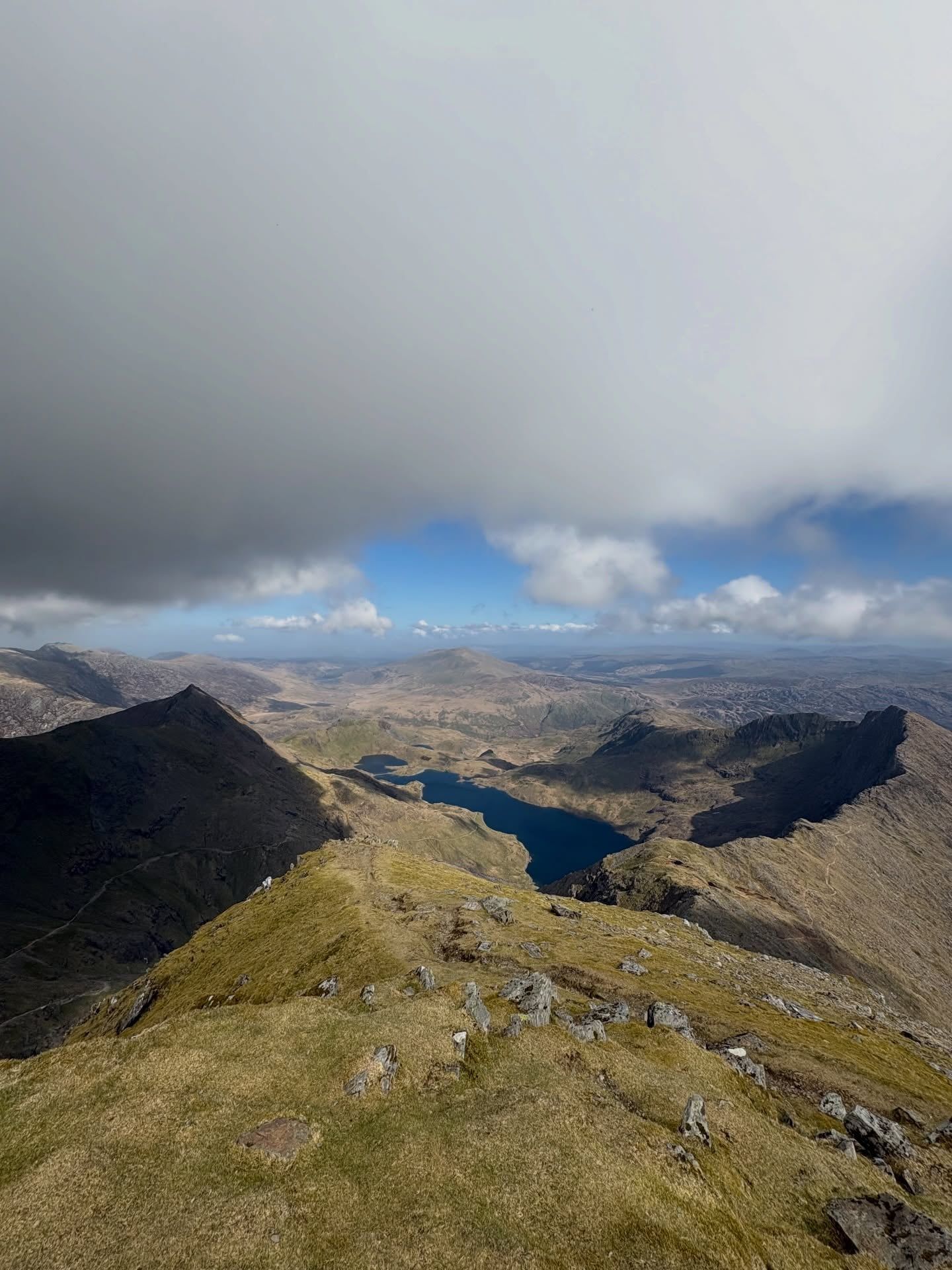
Most of Eryri's rock is igneous and sedimentary, built up and crushed over millions of years. Glaciers finished the job. Ice carved the cwms (corries) that hang off Yr Wyddfa's flanks and left behind corrie lakes such as Llyn Glaslyn, a green pool sitting in a bowl directly below the summit. When the ice retreated around 10,000 years ago, it left a terrain of knife-edged ridges, U-shaped valleys and bare cwms — the ground walkers cross today.
People have worked this ground for centuries. Slate quarrying reshaped whole hillsides, and copper mining left its own marks: the Miners' Track, now one of the six main routes up Yr Wyddfa, began life as a haul road carrying copper from the Britannia Copper Works near Llyn Glaslyn. You can walk into a worked copper seam yourself at Sygun Copper Mine in Nant Gwynant, one of several industrial attractions in the park.
Tourism came early and by rail. Betws-y-Coed drew Britain's first artists' colony in the 19th century, and its station opened in 1868 on the new Conwy Valley Line. In 1896 the Snowdon Mountain Railway began hauling visitors from Llanberis to the summit on a rack-and-pinion system — it still runs, and its gift shop occupies the original 1896 booking hall.
On 18 October 1951, under the National Parks and Access to the Countryside Act 1949, Eryri became the first national park in Wales and the third in the UK. In 2022 the Park Authority adopted the Welsh names Eryri and Yr Wyddfa for English-language use, after a two-year transition. In 2026 the Authority marks 75 years since Wales' oldest park authority was created — at a time when over 600,000 annual ascents of Yr Wyddfa have prompted fresh warnings about overtourism and accidents on the paths.
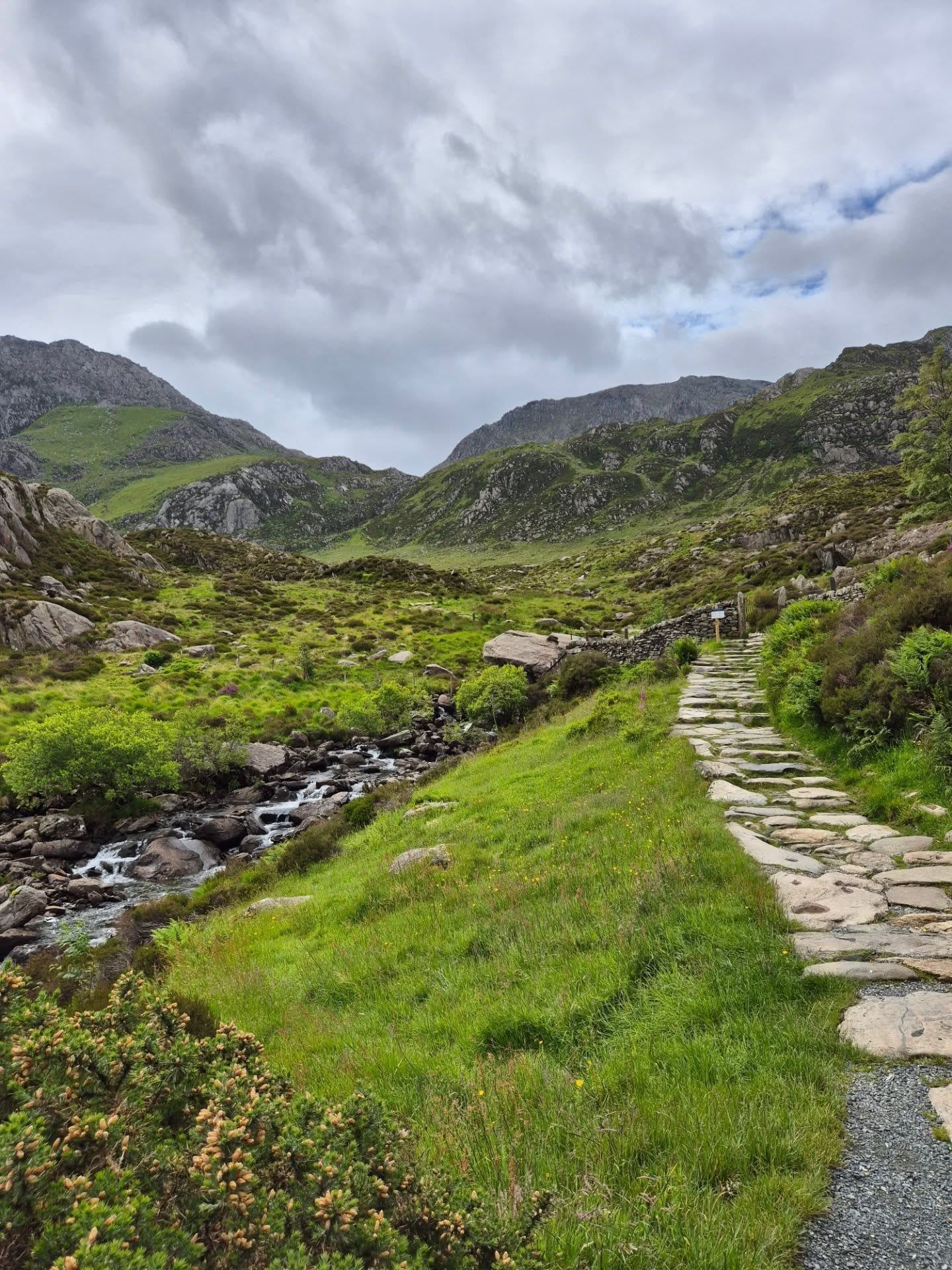
Nine mountain ranges sit inside the boundary: the Snowdon massif, Glyderau, Carneddau, Rhinogydd, the Cadair Idris and Aran ranges, and the Dyfi Hills among them. The rock is largely igneous and sedimentary, and glaciation did the sculpting — Yr Wyddfa alone carries several cwms on its flanks, with corrie lakes like Llyn Glaslyn pooled in the hollows. On a clear day the summit commands views over most of Eryri's other peaks and, on the very best days, as far as Ireland.
Yr Wyddfa itself is a National Nature Reserve. It shelters rare species found in few other places in Britain, among them the Snowdon Lily and the Snowdon Beetle. Habitats run from 11,000 hectares of native woodland up to bare mountain summits and down again to estuary shores along the park's 74 miles of coastline — few parks anywhere pack that much variation into one boundary.
Six marked routes lead to the summit, and Visit Wales classes every one of them hard or strenuous. The Llanberis Path is the longest but gentlest: 9 miles round trip with 975 m of climb, usually 2½–4 hours up and about 7 hours return. The Pyg Track is shorter and rougher — 3½ miles one way, 723 m of ascent over engineered, stepped ground that forces some walkers onto their hands near the top. The Miners' Track from the same Pen y Pass trailhead takes a gentler line past the corrie lakes. Whichever you choose, allow the full 6–8 hours for the round trip and carry OS Explorer OL17 as your map.
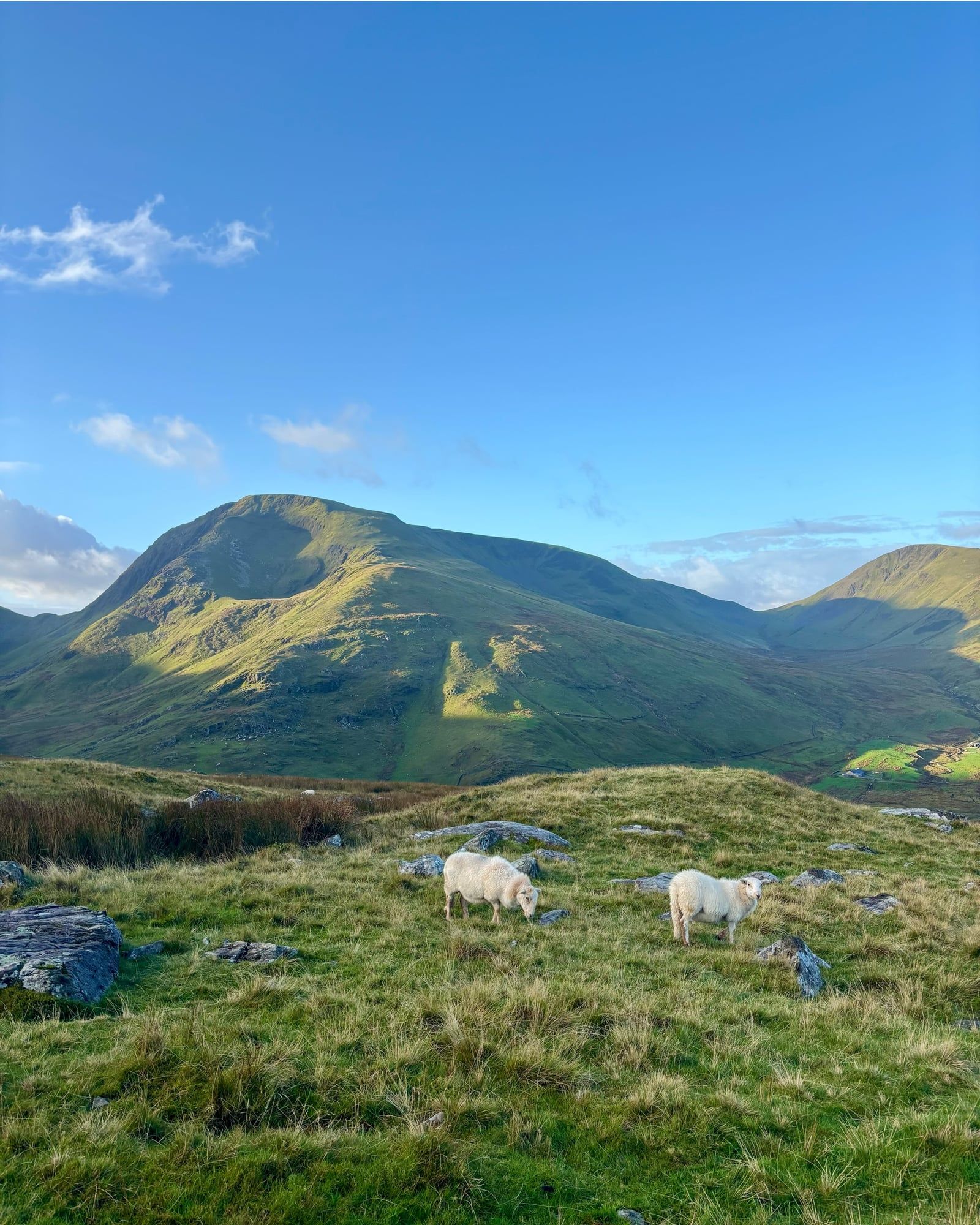
Legend wraps this mountain. Welsh myth names Yr Wyddfa as the burial place of Rhita Gawr, a giant killed by King Arthur — the cairn on the summit is his grave, so the story goes. Down in Nant Gwynant, Beddgelert takes its name from Gelert, the faithful hound of a medieval prince whose grave you can still visit on a family walk from the village. Few places in Britain carry their folklore so close to the surface.
The living culture is just as distinctive. Of the park's 26,000-plus residents, 58% speak Welsh — one of the strongest concentrations of the language anywhere — and road signs, school registers and café conversations run bilingually as a matter of course. That identity shaped the 2022 decision to make Eryri and Yr Wyddfa the park's official names in English too, retiring "Snowdonia" and "Snowdon" after a two-year transition.
On the park's fringes stand the 13th-century castles of Caernarfon, Harlech and Conwy, built by Edward I and now part of a UNESCO World Heritage Site. The artistic legacy runs just as deep: Betws-y-Coed hosted Britain's first artists' colony in the 19th century and has drawn painters and photographers ever since. Today the same mountain that inspired them carries 600,000 walkers a year, and locals, mountain rescue teams and the Park Authority are openly asking visitors to spread out, start earlier and treat the place as somewhere people live rather than just somewhere they visit.
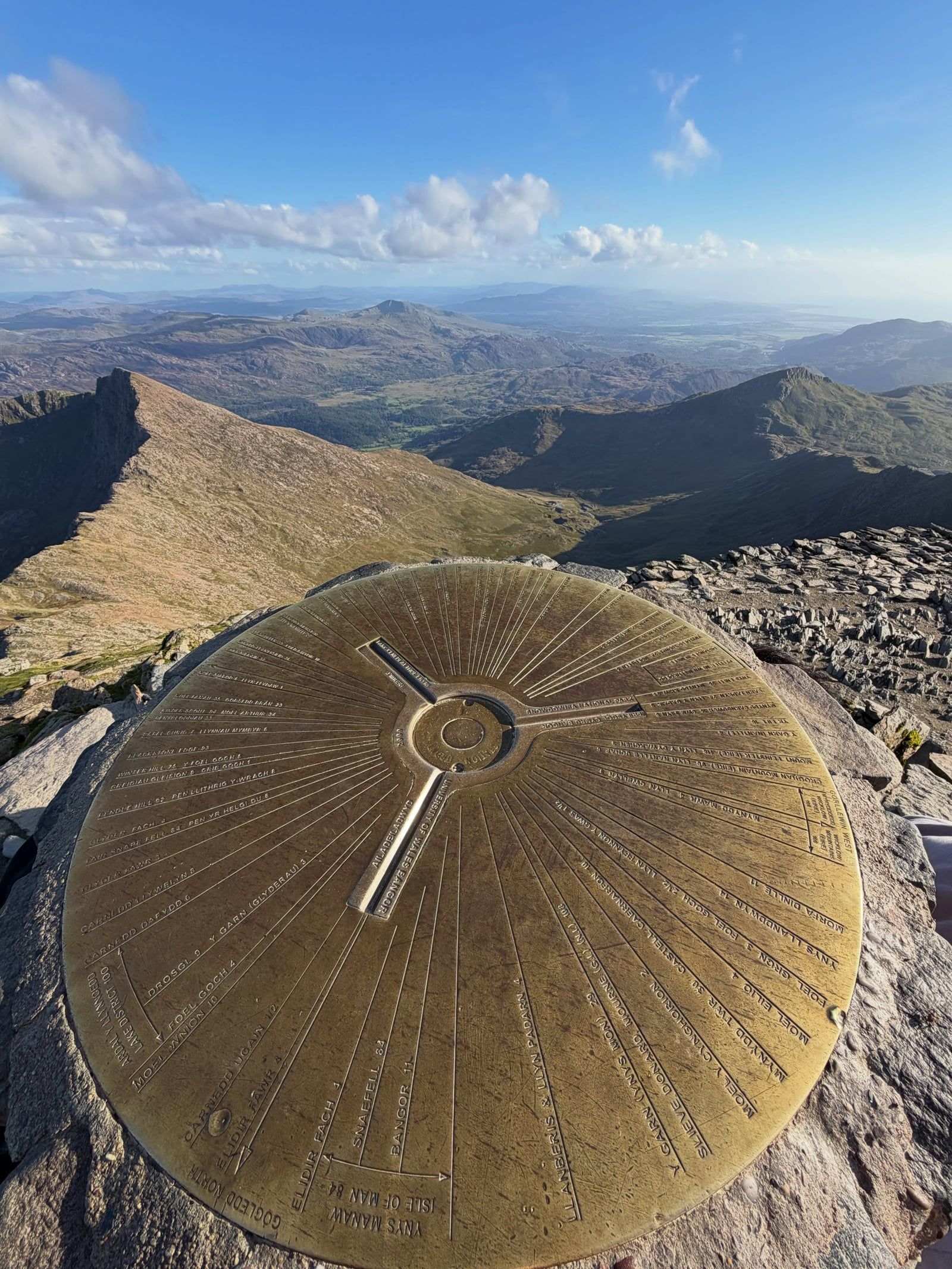
Hafod Eryri sits at 1,085 m on Yr Wyddfa's summit, billed by the railway as 'the highest refuelling station in the UK'. It serves hot drinks and grab-and-go food, with a gift shop attached.
You can post a card from a post box at 3,560 ft. It's one of the classic summit photos — and yes, the mail does get delivered.
Yr Wyddfa is a National Nature Reserve, home to rare species including the Snowdon Lily and the Snowdon Beetle, which survive on its upper slopes in few other places in Britain.
The Snowdon Mountain Railway has run since 1896. Its Heritage Steam Experience uses original Swiss steam locomotives with reconstructed 1896 observation carriages.
Betws-y-Coed attracted Britain's first artists' colony in the 19th century, drawing painters to the Conwy Valley decades before the railway's 1868 station opened the floodgates.
The Miners' Track, now a popular summit route, was originally built to carry copper from the Britannia Copper Works near Llyn Glaslyn. You're walking an industrial relic.
There are no bins anywhere on Yr Wyddfa. Over 600,000 people climb it each year, and every one of them has to carry all litter home — including fruit peel.
No. The park has no entrance fee, no permit and no booking requirement for walking, and it's open 24/7 year-round. You only pay for parking (£5–£45), the Snowdon Mountain Railway (£26–£62) and paid attractions like Zip World or Caernarfon Castle.
Visit Wales advises allowing 6–8 hours for the return trip on any of the six routes. Typical ascents: Llanberis Path 2½–4 hours, Miners' Track 2½–3½ hours, Snowdon Ranger 2¼–3 hours. The Pyg Track takes 1¾–3 hours each way over rough, stepped ground.
Yes. The Snowdon Mountain Railway runs from Llanberis to Hafod Eryri at the summit, taking about 2.5 hours return with a 30-minute stop at the top. A diesel return costs £45 adult off-peak (£48 peak), with the first train leaving at 9.00am and departures roughly every 30 minutes.
In 2022 the Park Authority adopted the Welsh names Eryri (for the park) and Yr Wyddfa (for Snowdon) for English-language use, after a two-year transition. Eryri had always been the Welsh name; the change made it official across signage and publications.
It was designated on 18 October 1951 under the National Parks and Access to the Countryside Act 1949, making it the first national park in Wales and the third in the UK. In 2026 the Authority marks 75 years since its creation.
Yes — until 1 November 2026 you must pre-book via JustPark, and there are only 68 spaces. Prices run £25 for up to 8 hours, £35 for 8–12 hours and £45 for a full day. The cheaper fallback is Nant Peris Park & Ride at £5/day with a Sherpa bus connection.
Not without permission. Wild camping anywhere in Eryri requires prior consent from the landowner or farmer, and camping in car parks or on roadside verges is banned at all times. Use one of the park's official campsites instead.
Only for older, fit children. All six summit routes are classed as hard or strenuous by Visit Wales, so families with young kids usually pick valley walks like the Beddgelert and Gelert's Grave circular, or take the railway, where children aged 3–15 pay reduced fares and under-2s travel free.
Changeable in every season, and colder the higher you climb. Summer days average 17–19°C in the valleys, but gusts over 30–40 mph affect balance on the exposed upper mountain and winds over 50 mph make walking near impossible. Always check the Met Office mountain forecast and the park's ground conditions report before setting out.
Yes on the paths, in the villages and on Sherpa'r Wyddfa buses, provided dogs are kept under control around livestock and wildlife. The exception is the Snowdon Mountain Railway, where only assistance animals are allowed.
Browse verified tours with free cancellation and instant confirmation.
Find Tours