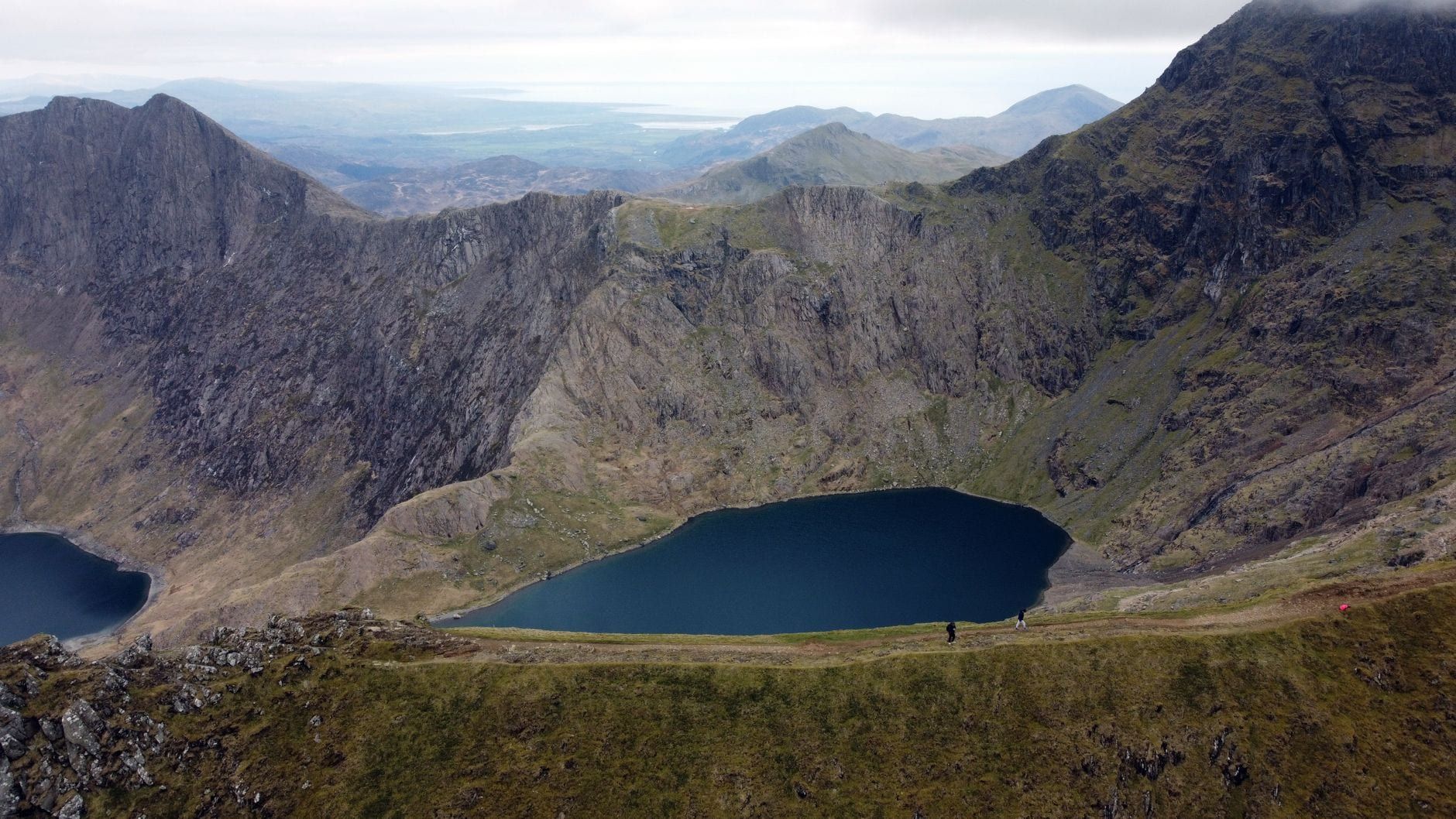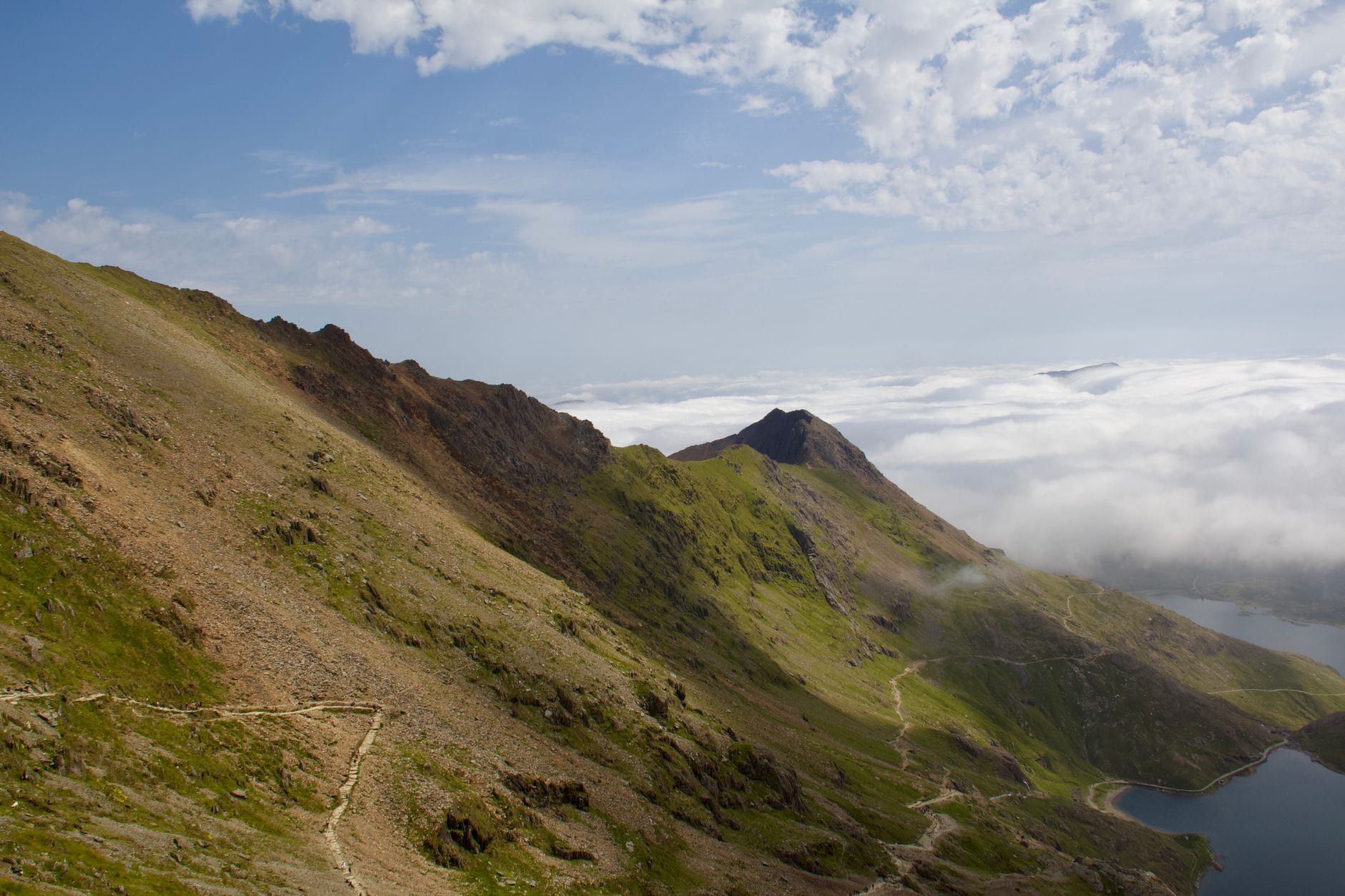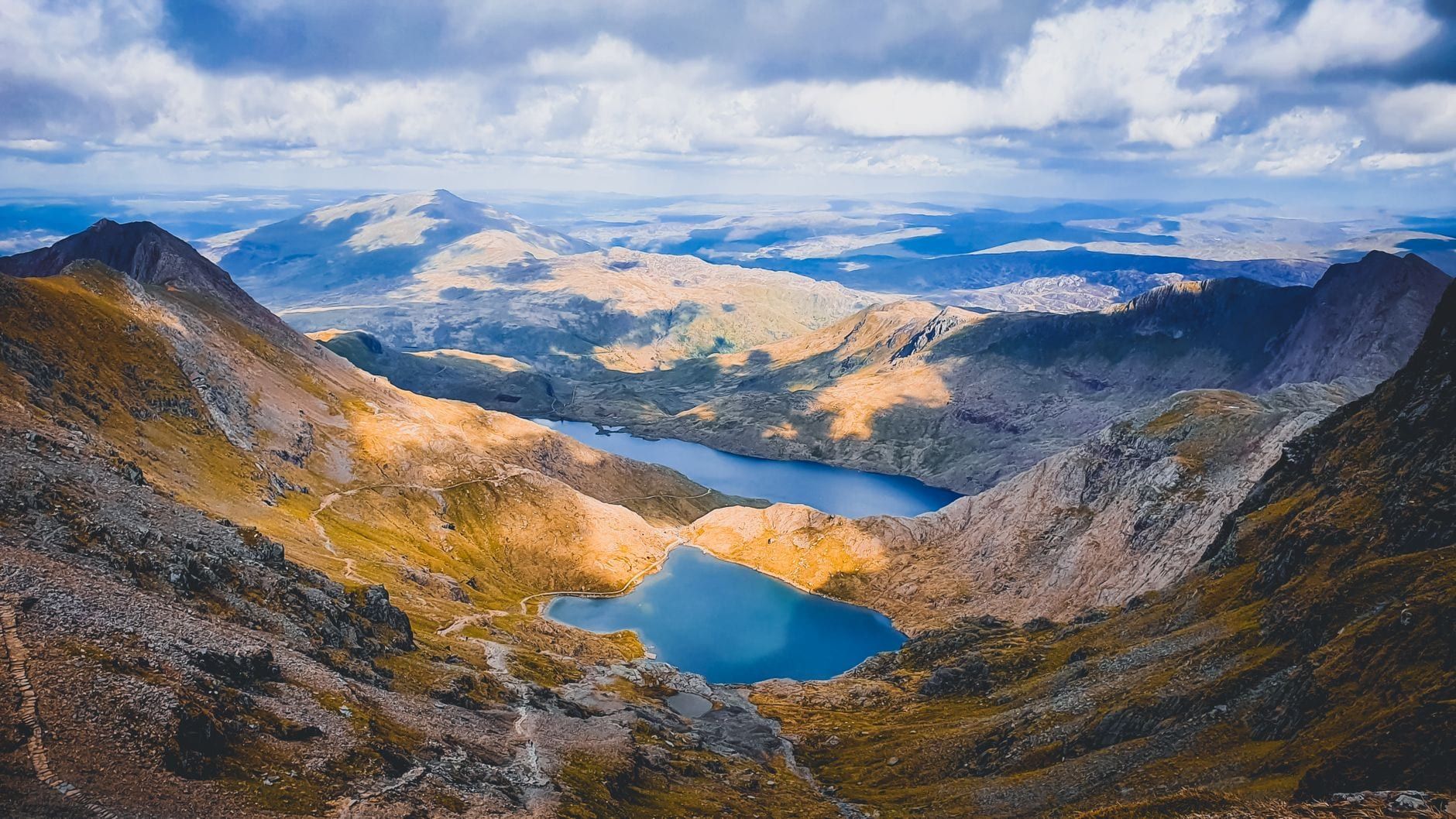
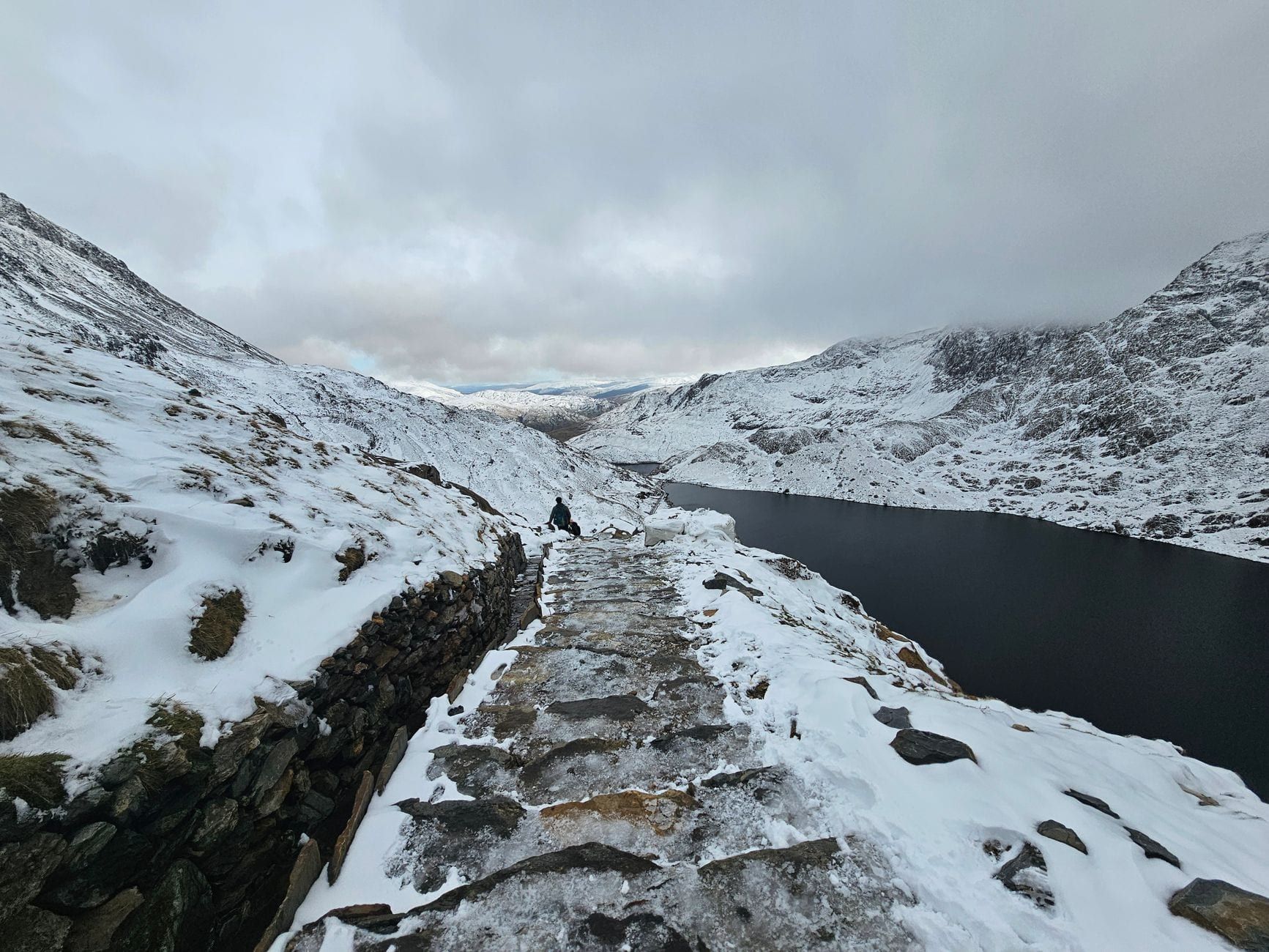
Snowdonia in winter is the park at its emptiest and most photogenic: snow on the summits, frost in the valleys, and light that gives up by 4pm. Nearly four million people visit Eryri, as the National Park is officially known, every year — and almost none of them come between November and February. That is the whole argument for going. You can walk for two hours on trails that queue in July, book a castle visit on the day, and pay winter rates for a cottage with a fire.
The trade-offs are just as real. Days run about eight hours, the summit railway stops for the season, and the high mountains can turn from green to ice-white within a day. This guide gives you both sides — what winter gives you, what it costs, and how to plan around it.
What Snowdonia in winter is really like (and whether it's worth it)
Yes, it's worth it — if you accept the terms. Winter brings the emptiest trails of the year, the kind of solitude that simply doesn't exist here from May to September. Snowdon's summit has more than 600,000 ascents annually; in January you can share a whole mountainside with nobody.
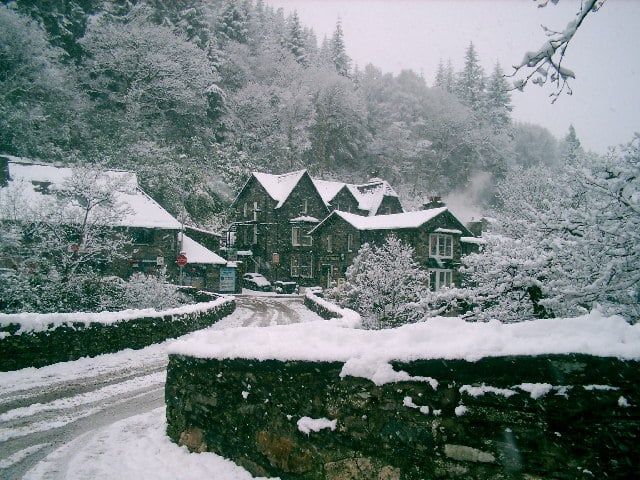
The scenery earns the trip on its own. Snow settles on the high ridges while the valleys stay green, mist rises off mirror-calm lakes on still mornings, and the low sun puts a golden edge on everything before it drops behind the peaks shortly after lunch. For photographers, this is the season — hard light, clean air, and no heads in the frame.
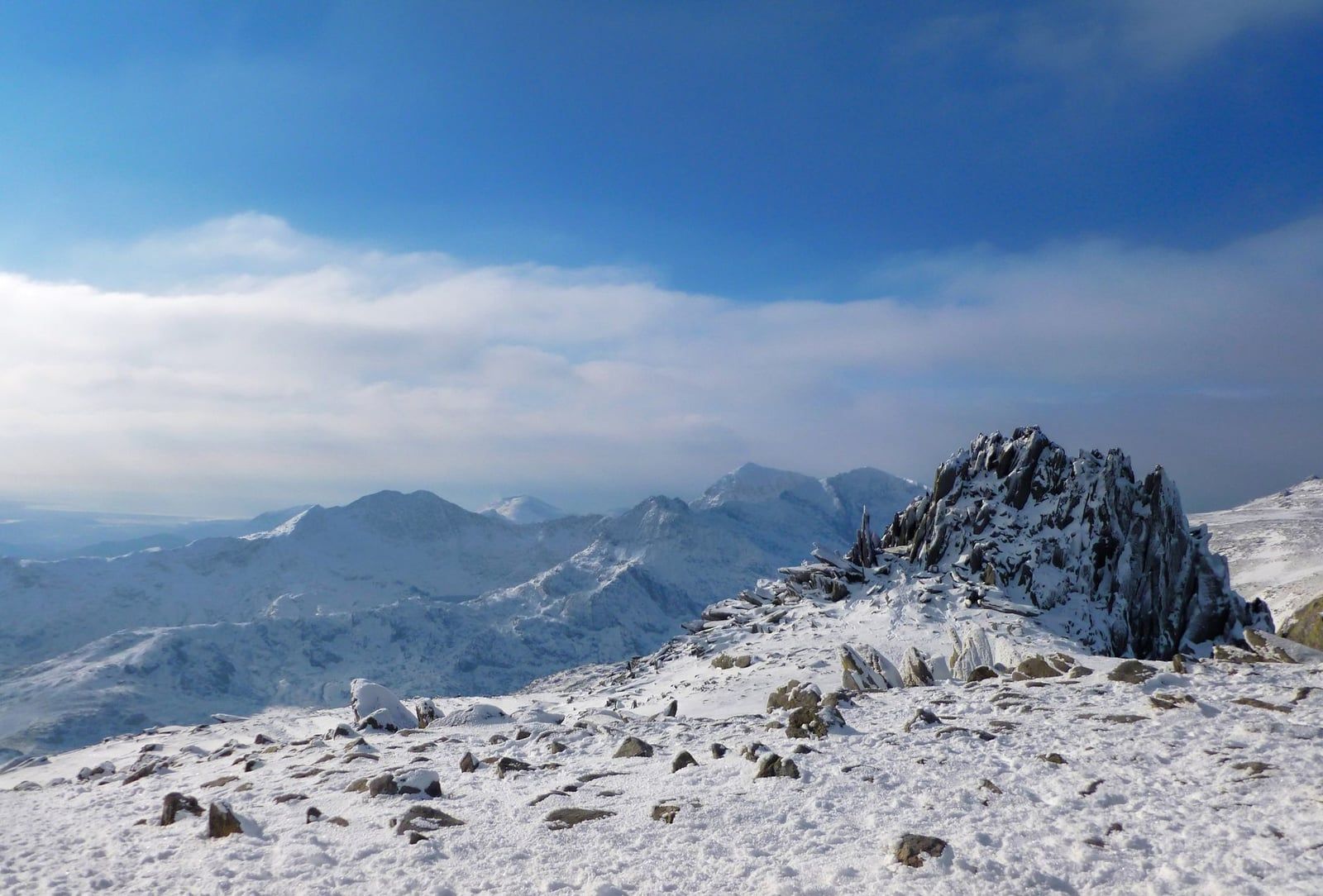
Now the bill. You get roughly eight hours of daylight, with sunset as early as 4pm in December. The Snowdon Mountain Railway and the Hafod Eryri summit building close for the season after 1 November. Conditions on the tops change fast, and the classic summit routes can demand crampons and an ice axe weeks before you expected them. Some attractions run reduced winter hours, so a quick check of websites the night before is part of the routine.
Who suits it: solitude-seekers, photographers, stargazers, and anyone who prefers a fireside pub to a queue. Who should wait for summer: first-timers who want the railway to the top, families needing long days for big walks, and fair-weather hikers. If a 4pm sunset sounds romantic rather than restricting, book it.
Winter weather and daylight: what to expect
The summit of Yr Wyddfa sits 1,085m above the sea, and temperature drops roughly 2–3°C for every 1,000ft you climb. On a mild December afternoon of 6°C in the valley — typical for the month, with overnight lows around 1°C — the top can be near freezing before you factor in wind chill, which matters far more than the forecast number. Gusts over 30–40 mph upset your balance; over 50 mph, walking on the upper mountain becomes close to impossible.
Does it snow? Yes, though sporadically. Sleet often falls on the high ground in late October, the first proper snows usually arrive in early November, and snow and ice can linger on the upper mountain any time until mid-April. January and February are the months you're most likely to find the summits white. December in the valleys averages around 185mm of rain, so waterproofs are not optional.
Changeability is the real winter story. In December 2021 the summit was icy enough to need crampons one day and completely snow-free six days later. The mountain can transform within hours between Atlantic storms and mild, wet spells, so a route that was fine last weekend means nothing this one.
Build a simple pre-trip workflow. Two or three days out, read the MWIS mountain forecast for Snowdonia — it gives the freezing level and feels-like summit temperatures, which is the number to plan around. The National Park also publishes a ground conditions report for Yr Wyddfa's paths and summit, usually on Tuesdays and Fridays from November to the end of April, hosted on YrWyddfa.Live. Check both before committing to high ground, and again on the morning itself.
Daylight discipline finishes the picture. With sunset around 4pm in December you have roughly eight usable hours, less than a summer day by half. Set a turn-around time before you start — noon is a sensible default for summit days — and carry a head torch even on a valley walk, because a twisted ankle at 3.45pm in December is a different problem than the same one in June.
Winter walking: trails, safety and whether to climb Snowdon
Match the route to the conditions, not the other way round. The cleanest way to think about winter walking here is in three tiers: valley and lake walks in ordinary kit, hill days where microspikes may earn their place, and full winter mountaineering on Yr Wyddfa with crampons, ice axe and the skills to use both.
Tier 1: valley and lake walks
The Cwm Idwal circular is the winter classic — about two to three hours of dramatic but leisurely walking beneath the Glyderau, past a dark glacial lake and cwms that hold their ice for weeks. Stronger legs can extend it along Llyn Ogwen or up to Llyn Bochlwyd. Further south, the Rhaeadr Ddu waterfalls via the River Gamlan give you black falls and gorge woodland, and the forest and waterfall trails around Betws-y-Coed work in almost any weather. You'll find more options for every level in our guide to the best Snowdonia hiking trails.
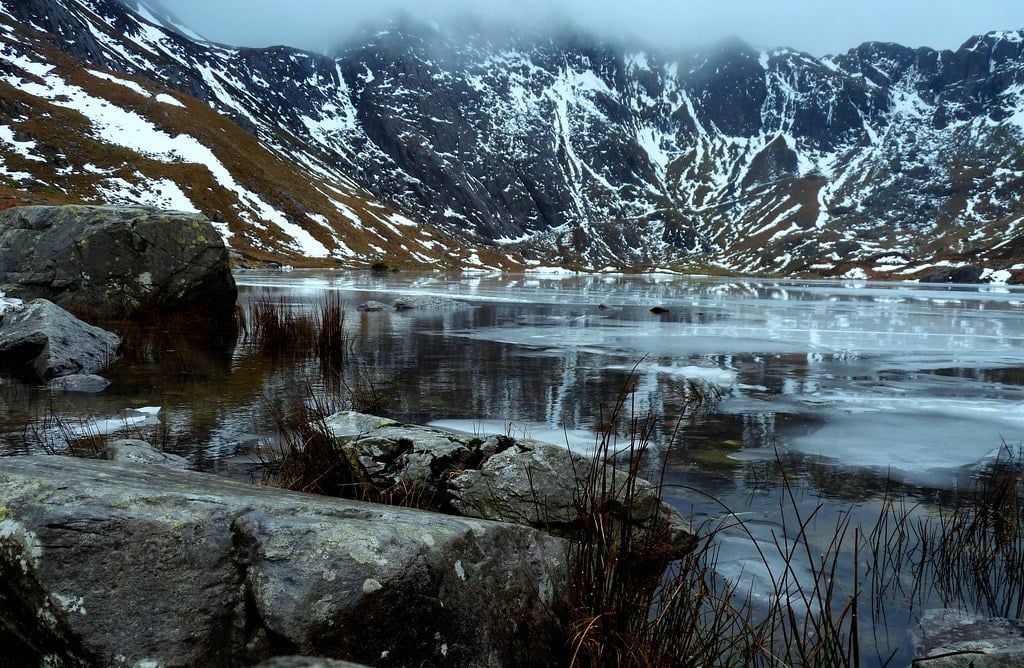
These routes need nothing more than warm layers, waterproofs and boots with good tread. If ice has formed, pick a path rather than a slope and save the hills for another day.
Tier 2: hill days and microspikes
Between the valley and the mountain sits the spiked hill day: routes above the treeline that are straightforward in summer but may hold hard-packed ice on shaded sections through winter. A set of microspikes — stretchy rubber frames with short steel points that pull over your boots — turns an anxious shuffle into a steady walk on that ground. Budget at least £35 for a pair worth trusting; cheaper ones shed their points.
Know their limit. Microspikes suit low-angle icy paths only, typically 15–20 degrees at most. On anything steeper they can pop off or skid, exactly where you need grip most. The test before each section: if I slip here, where do I stop? If the answer is a long slide, spikes aren't enough — that's crampon ground, or no-go ground.
| Microspikes | Crampons | |
|---|---|---|
| Best for | Icy but low-angle paths (up to ~15–20 degrees) | Steep, hard snow and ice, including graded ground |
| Boots required | Any reasonably stiff walking boot | Firm-soled, crampon-compatible boots — a three-season boot won't do |
| Cost | From around £35 for a durable set | More, plus boot compatibility |
| Skills needed | Pull them on at the icy patch; no training | Require training to fit and walk in safely, plus an ice axe |
Tier 3: climbing Yr Wyddfa in winter
Can you climb Snowdon in winter? Yes — but for most summer walkers, honestly, not yet. Snow and ice usually affect the upper mountain from about 750m upwards, roughly from the Pyg/Miners' Tracks junction or Clogwyn Bridge on the Llanberis Path, though after heavy falls snow can reach down to Pen y Pass. Above that line you need crampons, an ice axe and, more importantly, the trained ability to use them — how to move in crampons, how to self-arrest a slide. Beginners should either book a winter skills course or hire a local guide for the day.
Route choice matters more than in summer. The Llanberis Path, usually the gentlest option, has notoriously treacherous icy sections around Allt Goch above Clogwyn station — and never walk the railway line beside it, which is worse underfoot and against the rules. Aspect matters too: the Pyg Track enters a north-east-facing corrie that ices early and stays icy, while the south-western flank above Rhyd-Ddu catches more sun and can be clear when the Pyg is glass.
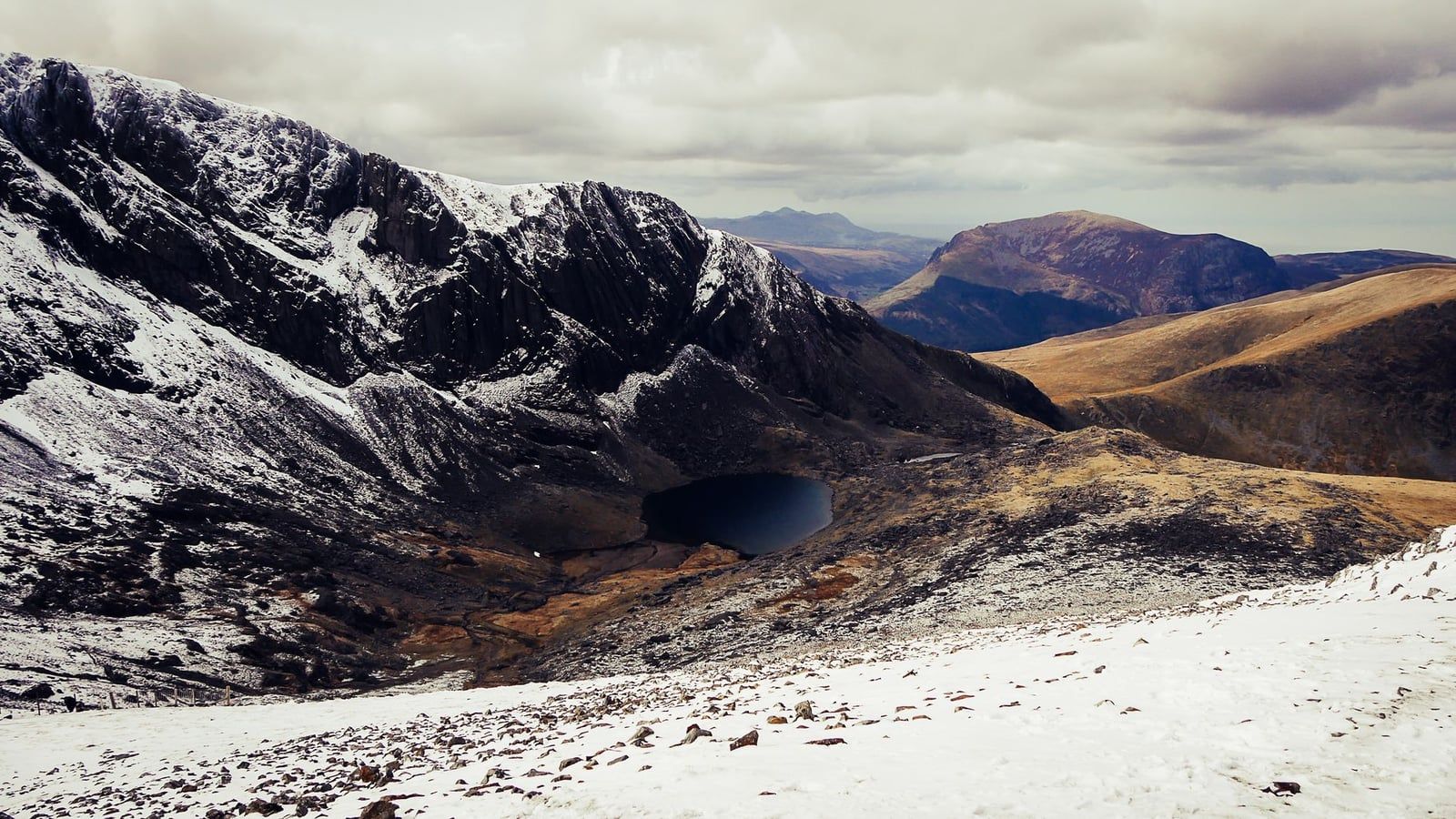
The hazards you can't see deserve naming. Verglas — a transparent film of ice on rock — is invisible until you're on it. Cornices of wind-slabbed snow build on ridge edges, often visible at Bwlch Glas on the northern paths, and will not hold your weight. After heavy snowfall, small localised avalanches do occur on the steep ground. For walkers with genuine winter skills, the South Ridge from Rhyd-Ddu (12.5km, 925m of ascent, with the narrow arete at Bwlch Main) is the connoisseur's route — a proper winter outing with the ridge to yourself.
Winter safety essentials
Hypothermia creeps up rather than announcing itself. Early signs are shivering, fatigue and clumsy fumbling; disorientation follows, and by then the person affected is often the last to know. A survival bag or group shelter slows its onset, so carry one from November onwards. Never walk the high routes alone, always tell someone your route and expected return time, and treat turning back as a decision made at the planning stage, not a defeat on the hill.
Navigation is a map-and-compass job first. Snow flattens detail, footpaths vanish under white, and GPS batteries die in the cold — keep the phone as backup, warm against your body, with a charged power bank. If you can't take a bearing in gloves with wind in your face, that's the specific skill to learn before a winter summit day.
What to pack for a Snowdonia winter
Everyone visiting between November and February carries the same basics, whether they're crossing a valley field or queueing at the summit cairn:
- Warm layers under waterproof jacket and trousers
- Boots with good tread and ankle support
- Spare gloves, hat and socks in a dry bag
- Map, compass and head torch with spare batteries
- A flask and more food than you think you need
- First aid kit, phone kept warm, charged power bank
High-route walkers add the winter rig: a roughly 40-litre rucksack with dry bags, stiff-soled crampon-compatible boots, crampons, an ice axe, goggles for spindrift, and an emergency group shelter. The boots matter more than people expect — walking crampons need a firm sole to flex against, and a three-season boot simply won't take them.
One caveat sits above all of it: gear without skills is worse than no gear, because it buys false confidence. If you're stepping up to winter mountaineering, spend the money on a winter skills course or a guided day rather than a second gadget. Batteries drain fast in the cold — the flask and the fully charged power bank have saved more winter days than any piece of technical kit.
Winter things to do beyond the hills
The mountains are only half the park. Through winter the big attractions stay open, drop their queues, often drop their prices, and mostly stop requiring the pre-booking that summer demands. Our wider rundown of the best things to do in Snowdonia covers the full year; here's what earns its place in the cold months.
Castles without the crowds
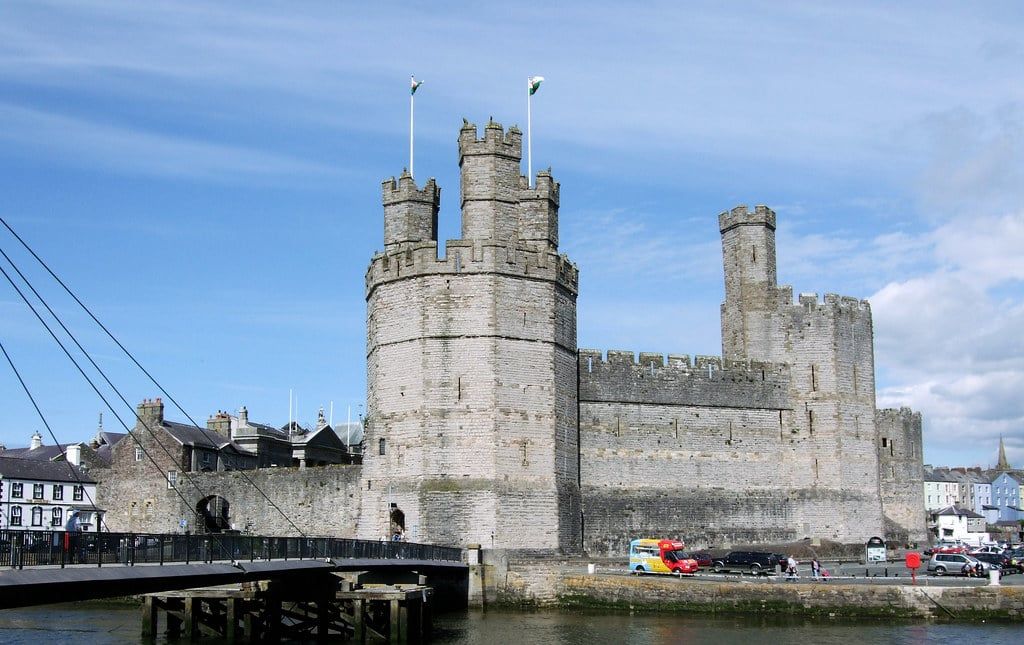
The medieval fortresses of Edward I's Iron Ring — Conwy, Caernarfon, Harlech and Beaumaris — all stay open through winter, and in January you can walk walls that in August carry a human procession. Caernarfon, the biggest of them, charges £14.90 for an adult ticket and admits disabled visitors and their companions free. Pick one, take your time, and finish with chips in the town while your hands recover.
Underground: slate mines
Corris Mine Explorers runs its award-winning underground trips into the old slate workings all year, and winter is arguably the best time — the temperature underground doesn't change, and the surface stops competing for your day. The wider slate landscape of north Wales, quarried for centuries, is now a UNESCO World Heritage Site, and you feel that history most clearly with a helmet lamp and no phone signal.
Adrenaline in the cold
Zip World keeps the thrill schedule running: Velocity 2, the fastest zip line in the world, drops you head-first over Penrhyn Quarry's turquoise water, while the Fforest Coaster and the underground trampoline caverns of Bounce Below cover families and the shoe-averse. Add Coed y Brenin, the UK's first purpose-built mountain-biking centre, whose visitor centre, café and trails stay open over winter, and white-water rafting on the Tryweryn at the National White Water Centre — the one activity winter rain actively improves.
Fires, ale and wet-weather insurance
Cosy pubs are a Snowdonia winter attraction in their own right. The Ship Inn at Red Wharf Bay and the Ty Coch Inn at Morfa Nefyn, with its beach-front beer garden, both justify a detour — fire, local ale, proper food. And for the day the rain sets in properly, Venue Cymru in Llandudno and Galeri in Caernarfon run theatre, film and music through the winter months. A storm-day fallback you book at 11am for 2pm is worth more than any itinerary.
Stargazing and dark skies
Winter is the only season with genuinely long dark nights, and Snowdonia is an International Dark Sky Reserve — one of very few in the UK, designated and managed by the National Park. Put those two facts together and you get the best stargazing window of the year, with darkness by 6pm and nobody else at the layby.
On a clear night you can see the Milky Way, all the major constellations, nebulae and the odd shooting star — no telescope required. The lakes make the classic viewpoints because they double the sky: Llyn y Dywarchen, Llyn Geirionydd and Llynnau Cregennen are reliable picks, and several lakeshores can be reached on foot in the dark with a torch and a bit of care.
Pick a cold, clear, high-pressure night — often the night after a front clears — and arrive before dark so you're not setting up by head torch. Swap your white torch for a red-light one once your eyes adjust, and bolt the evening onto a pub supper; that's a better plan than driving out at 11pm when you're already warm.
A month-by-month winter calendar (November to February)
Conditions and events move together through a Snowdonia winter, so the best answer to "when should we go?" is to match the month to what you want. This calendar pairs each one's realistic weather with what's actually on.
November
The transition month. Sleet often dusts the high ground in late October and the first proper snows usually arrive on the tops in early November, but the valleys stay green and walkable. Bonfire night brings the season's first big event — Beaumaris puts on the area's best fireworks display, with live bands and food stands. Visitor numbers thin out ahead of Christmas, so mid-November is as quiet as the park gets.
December
Christmas markets appear across the region, and the Bala Lake Railway runs its Santa Specials — decorated locomotives, a grotto visit and a gift for the children. Book well ahead; they sell out. The nights are the darkest of the year, which makes this the peak stargazing month, and sunset around 4pm means every walk needs a plan. Do the big walk in the morning, the fire in the afternoon.
January
The snowiest odds of the year and the emptiest trails. On the 25th, St Dwynwen's Day — Wales's own patron saint of lovers — sends a romantic pilgrimage to Llanddwyn Island off Newborough Beach, a spot of church ruins and seals that deserves the visit in any month. If you want the postcard of snow-capped mountains reflected in a still lake, this is when to come for it.
February
Snow chances stay high on the tops, but the days stretch noticeably and the weather swings hard between full winter and spring sunshine — pack for both in the same rucksack. It's a strong month for photographers, because you get low light, snow, and usable hours back.
Any month: the coast and the rainforest. Winter beach walks in Snowdonia mean empty sands and hard light off the sea, with none of summer's crowds. Inland, the park's temperate rainforest — one of the rarest habitats on earth — stays green right through winter, and with the canopy opened up you see more of it than you would in July.
Planning your winter trip: what's open, where to base, and timing
The mountain never closes; the infrastructure around it does, partially. Here's the winter picture at a glance:
| What | Winter status |
|---|---|
| Yr Wyddfa paths | Open year-round, free, no booking needed |
| Snowdon Mountain Railway | Closed after 1 November; plans to reopen around late March, with summit trains from around 1 May |
| Hafod Eryri summit building | Closed with the railway |
| Pen y Pass car park | Pay and display November–March; summer pre-booking suspended |
| Castles, Zip World, slate mines | Open, quieter, sometimes cheaper — check reduced hours |
Reduced winter hours are the main trap, so verify each attraction's schedule before you drive to it — our page on Snowdonia opening hours and fees is a good starting point. For travel planning, the route from London to Snowdonia by train, car or coach takes under four hours from Euston to Bangor, with Sherpa buses covering the final stretch.
Base yourself in Betws-y-Coed, Llanberis or Beddgelert. Betws-y-Coed — thronged in summer — goes quiet and cosy, with cafés, stone bridges and waterfalls on the doorstep; Llanberis puts you at the foot of the mountain; Beddgelert is the small, fireside option. Winter rates run well below summer, and if you're weighing up villages, our guide to where to stay in Snowdonia compares the bases in detail.
Structure two or three days so the weather can't wreck them: one valley-walk day, one castle or adventure day, and one flexible day held back for a high route or a dark-sky night if a weather window appears. Book the flexible day last, and let the forecast — not the itinerary — decide. If you'd rather leave the judgement calls to someone who reads these mountains daily, guided Snowdonia tours run through winter and handle the conditions, kit and timings for you.
Frequently asked questions
Is Snowdon (Yr Wyddfa) open in winter?
The mountain and all six walking routes are open year-round, free, with no booking needed. What closes is the Snowdon Mountain Railway and the Hafod Eryri summit building — the railway finishes on 1 November and plans to reopen around late March, with summit trains from around 1 May.
Does it snow in Snowdonia in winter?
Yes, but sporadically. Sleet often falls on the high ground in late October, the first snows usually arrive in early November, and snow and ice can sit on the upper slopes from November to mid-April. January and February are the likeliest months to find snow-capped summits.
Can beginners climb Snowdon in winter?
Not without winter skills. Ice typically affects the routes above about 750m, where you need crampons and an ice axe and the training to use them — microspikes only cover low-angle icy paths. Beginners should stick to valley walks or book a guide or winter skills course.
What is there to do in Snowdonia in winter besides hiking?
Plenty: the castles of Conwy, Caernarfon, Harlech and Beaumaris stay open, along with Corris slate mine tours, Zip World's Velocity 2, Fforest Coaster and Bounce Below, mountain biking at Coed y Brenin, white-water rafting at Tryweryn, cosy pubs and some of the UK's best winter stargazing.
Where can you stargaze in Snowdonia in winter?
Snowdonia is an International Dark Sky Reserve. On clear winter nights you can see the Milky Way, the major constellations, nebulae and shooting stars — reliable spots include Llyn y Dywarchen, Llyn Geirionydd and Llynnau Cregennen.
What should you pack for Snowdonia in winter?
Layers and waterproofs, spare gloves and hat, boots with good tread (crampon-compatible if you're going high), map and compass, head torch with spare batteries, traction for ice, a survival bag, flask and extra food. Keep your phone warm and carry a power bank — batteries drain fast in the cold.
What time does it get dark in Snowdonia in winter?
Sunset comes as early as around 4pm in December, giving roughly eight usable daylight hours. Set a turn-around time before you set off and carry a torch even on day walks.
Is Pen y Pass car park open in winter?
Yes. From November to March it runs on pay and display, so the summer pre-booking system is suspended. Check the parking and Sherpa bus arrangements before setting out, as winter services differ from summer's.