Snowdonia is the only national park in Britain where you can stand on a beach and look straight at 3,000-foot mountains. The Eryri/Snowdonia coast runs to roughly 200 miles and more than 35 beaches, wrapping the Llŷn Peninsula and the Cardigan Bay shore — and yes, much of it sits inside the park's boundaries. You can surf Atlantic swell in the morning and be on a summit path by early afternoon.
This guide splits the coast into three zones so you can cluster your days sensibly, then profiles the best beach on each stretch. It also covers the practical layer most guides skip: parking postcodes, the April-to-September dog rules, tide dangers and where lifeguards actually patrol. For the wider picture of what else the park holds, see our things to do in Snowdonia guide.
Does Snowdonia Have Beaches? Where the Mountains Meet the Sea
Yes — and serious ones. The park's protected coast takes in the Llŷn Peninsula and stretches down Cardigan Bay, with the peaks of Eryri visible from the sand at Harlech, Dinas Dinlle and Morfa Bychan. The Wales Coast Path stitches it all together: 189 miles of it run through Gwynedd alone, linking beach to beach. Few places in Britain put mountains and swimmable sand this close together.
Practically, the coast divides into three zones. The Llŷn Peninsula has nearly 100 miles of shoreline wrapped around three sides: a calm, sandy south coast nicknamed the Welsh Riviera, and a rugged north and west of cliffs, coves and offshore islands, sheltered by the Snowdonia massif and its mild micro-climate. Tremadog Bay runs from Harlech past Porthmadog to Criccieth, all dunes and castle views. The Cardigan Bay shore — Barmouth, Tywyn, Aberdyfi — faces west for sunsets and dolphins.
Two honest caveats. Welsh weather is not Mediterranean: summer days average 17–19°C, August sees roughly 14 rainy days, and you should pack a windproof even for the beach. And the zones are an hour-plus apart by road, so base yourself near one coast rather than commuting — our Snowdonia accommodation guide covers the best seaside bases. Getting there from England's cities takes under three hours; see our directions to Snowdonia page for routes.
Snowdonia Beaches at a Glance
Six beaches below cover the range — big family sands, surf, a pub on the beach and a UNESCO castle backdrop. Every row is expanded in the coast-by-coast profiles that follow, and the postcodes go straight into a satnav.
| Beach | Zone | Best for | Postcode |
|---|---|---|---|
| Barmouth | Cardigan Bay | Big sands, families, the Mawddach bridge | LL42 1NE |
| Tywyn | Cardigan Bay | Gentle swimming, dolphin spotting | LL36 0DE |
| Aberdyfi | Cardigan Bay | SUP, estuary walks, low-tide petrified forest | LL35 0EA |
| Harlech | Tremadog Bay | Dune walks, castle views | LL46 2SR |
| Porthdinllaen | North Llŷn | Pub on the beach, seals | LL53 6DA |
| Llanbedrog | South Llŷn | Sheltered family sand, headland walk | LL53 7TT |
The Best Beaches in Snowdonia, Coast by Coast
Eleven beaches earn full profiles below, grouped so a day on one coast stays a day on one coast. Each gets what it's like, the thing that sets it apart, and where to park. The quick mentions — Shell Island, Llandanwg, Llwyngwril, Pwllheli South Beach and Traeth Penllech — are folded into their stretches.
Cardigan Bay: Barmouth, Tywyn and Aberdyfi
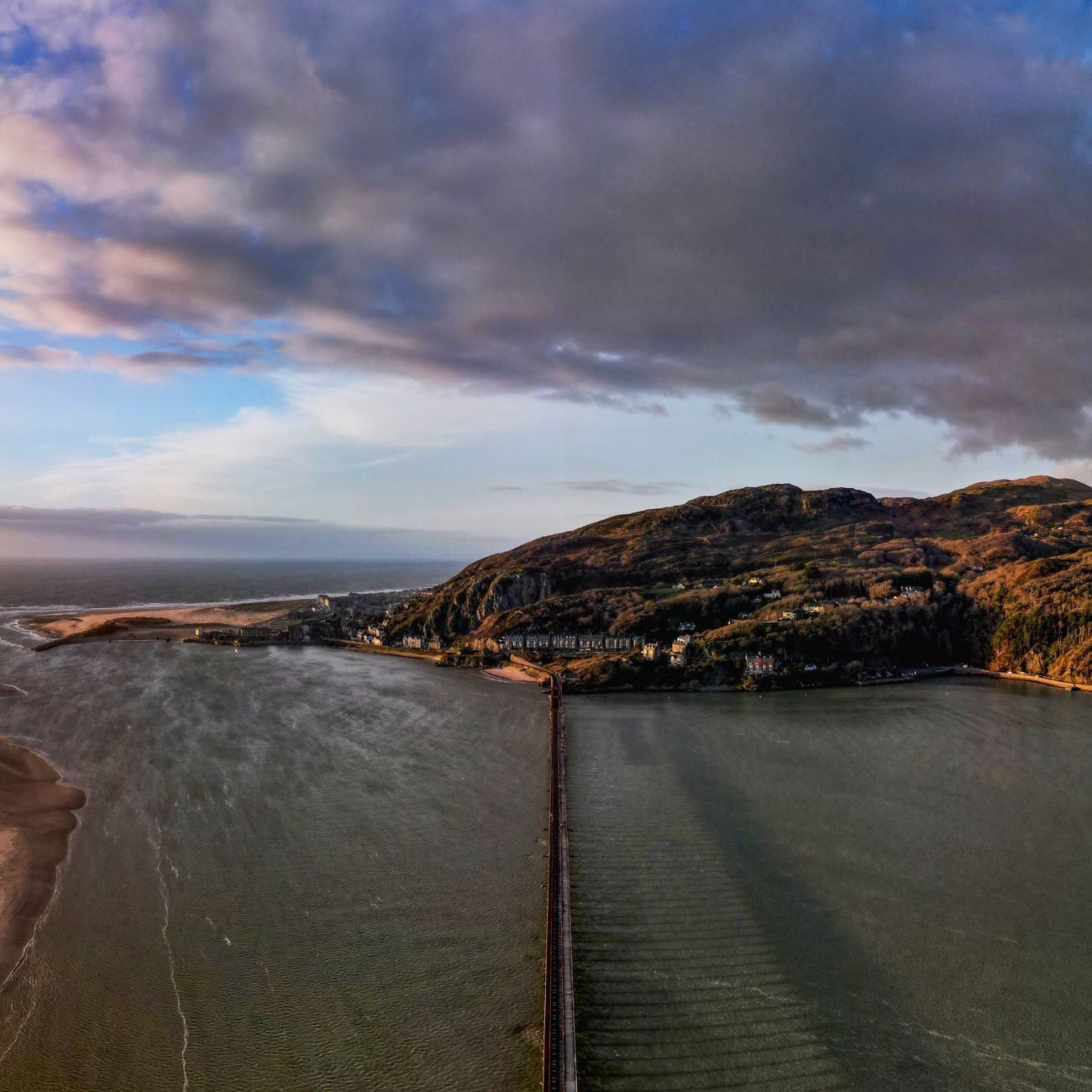
Barmouth (Abermaw) is the coast's big hitter: a huge sweep of sand in front of the town, with largely uncrowded miles continuing north. Behind it, the 19th-century bridge across the Mawddach Estuary is one of Britain's longest wooden viaducts, and the flat estuary trail beside it is one of the park's most accessible walks. Barmouth's seafront does proper fish and chips — the Lobster Pot is the fixture. Park at LL42 1NE and expect to pay in summer.
Tywyn runs to almost five miles of sand with a gentle slope and shallow water, which is why families rate it. It's also a popular surfing beach and one of the best places on this coast to spot dolphins and porpoises from shore — scan the bay on a calm evening. Aberystwyth-style seafront facilities, but quieter.
Aberdyfi sits at the mouth of the Dyfi Estuary, sand curving out toward the channel in a shape that photographs itself. At low tide the stumps of a petrified forest surface on the flats; local legend says the pier bell once belonged to a kingdom drowned beneath the bay. The village is genteel and well-fed, the main car park (LL35 0EA) is open 24 hours, and paddleboarders launch here — Let's SUP runs hire and lessons.
Tremadog Bay: Harlech and Black Rock Sands
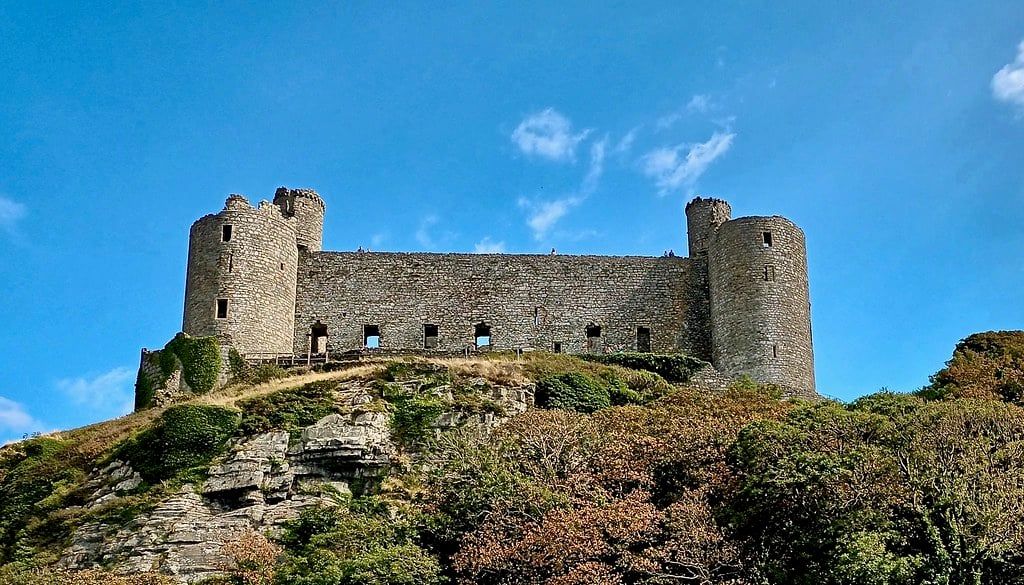
Harlech Beach is four miles of sand backed by Morfa Harlech National Nature Reserve — one of Britain's most important actively growing dune systems, alive with skylarks, ringed plovers and rare butterflies, moths and bees. Roughly a kilometre inland stands Harlech Castle, a 13th-century fortress from Edward I's iron ring and now a UNESCO World Heritage Site; you can pick out its walls through the dunes from the sand. Parking at LL46 2SR, a short walk over the dunes.
Morfa Bychan (Black Rock Sands) is the famous one: a two-mile beach where vehicles drive onto the sand via a slipway. It's a genuine novelty — park your car beside your picnic — but the sand is backed by SSSI dunes with the Eryri mountains behind, and there are rock pools at the western end. The rules matter here: a fee applies on the foreshore from 1 April to 30 September (card payment only), the speed limit is 10 mph, and drivers have to respect the incoming tide — cars have been submerged. Half price after 4pm and for blue-badge holders.
Two quick mentions fill out the bay. Shell Island, south of the estuary at Llanfair, is a vast campground-backed strand reached over a causeway that floods at high tide. Llandanwg is a quiet dune-backed beach by the Dwyryd estuary (LL46 2SD) with a tiny old church hidden in the dunes — a good escape when Harlech is busy.
The Llŷn Peninsula: Welsh Riviera, Surf Bay and Whistling Sands
Dinas Dinlle, near Caernarfon, opens the peninsula with an enormous beach and widescreen views toward Llŷn, Snowdonia and Anglesey. Walkers, windsurfers and power kiters share it, and the plane from the beach is all big sky. It faces the Irish Sea, so it blows.
Abersoch anchors the south-coast Welsh Riviera: sandy, sheltered, and busy with wakeboarders and water-skiers in summer, with sailing events staged off the beach. The village behind it is the Llŷn's most social — cafes, shops, and a holiday crowd to match. Book accommodation early for July and August.
Porth Neigwl (Hell's Mouth) is the surf beach. A three-to-four-mile bay wrapped in cliffs, it takes the full Atlantic swell, goes pebbly at high tide and exposes vast sand as it drops. Swimmers should treat it with respect — the currents are strong and the bay is not patrolled. Abersoch Watersports runs surf lessons nearby.
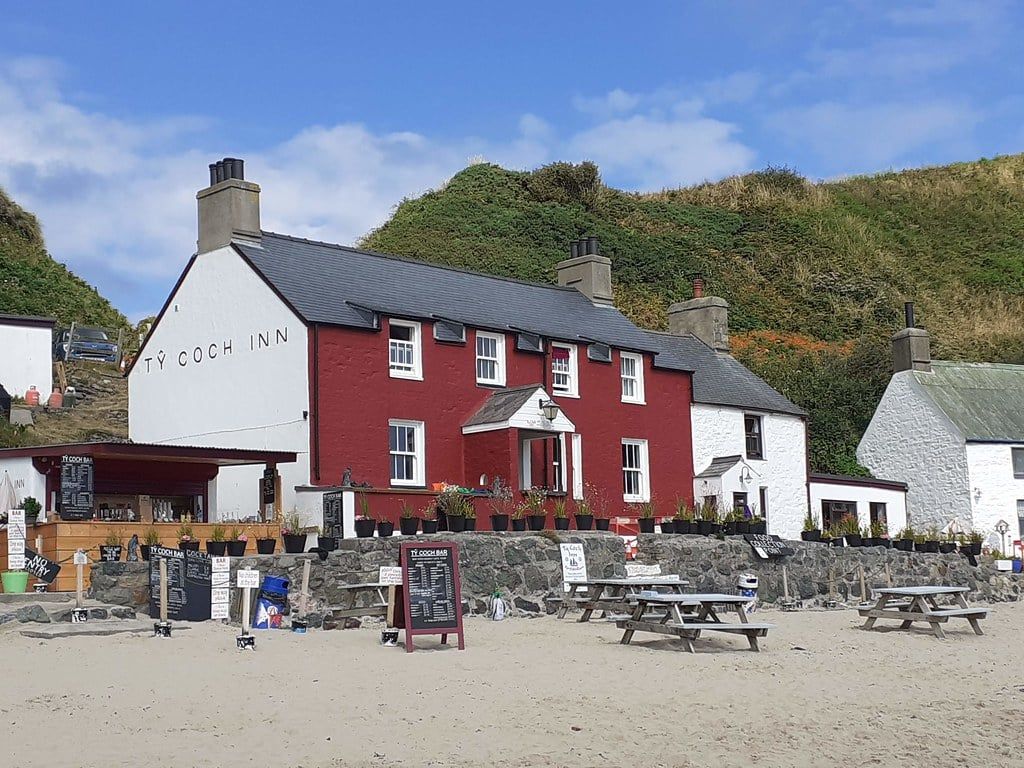
Morfa Nefyn and Porthdinllaen form two miles of sweeping sand scooped into crescents on the north coast, with views to the Iron Age Garn Boduan hillfort and the Rivals mountains. At the tip, Porthdinllaen's beach holds the Tŷ Coch Inn, a pub that sits directly on the sand and is reachable only on foot or by boat — a 20-minute walk from the National Trust car park at Morfa Nefyn (LL53 6DA). On clear days Anglesey sits across the water. Grey seals and oystercatchers work the headland.
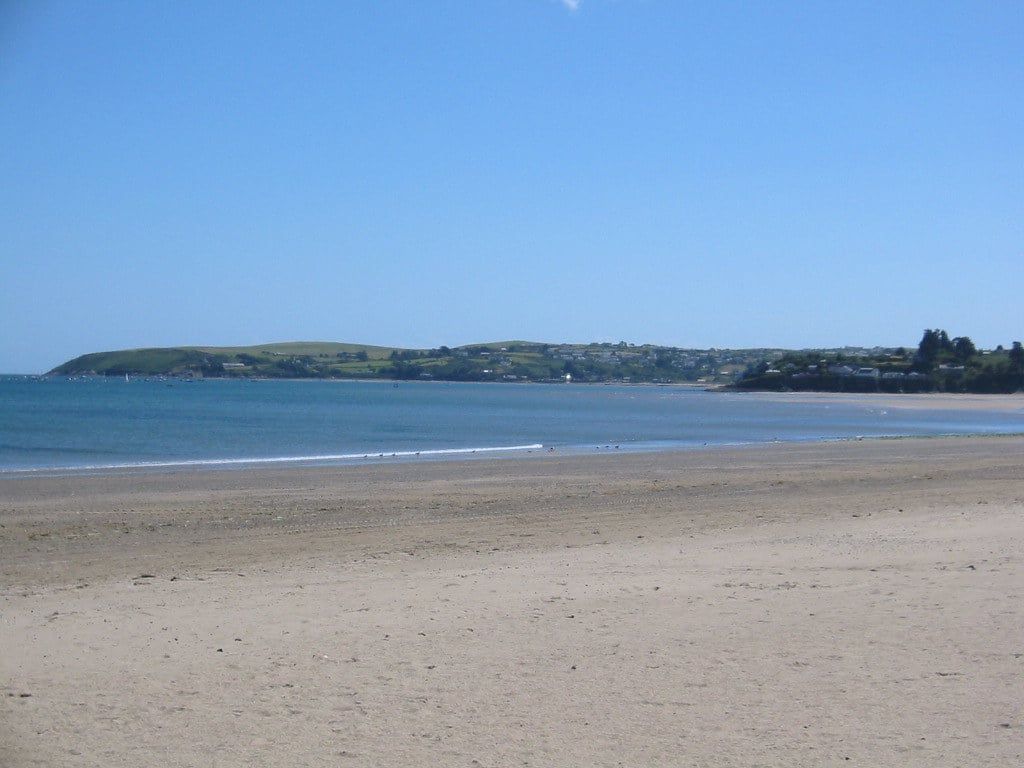
Llanbedrog offers a mile of sheltered sand, National Trust-owned, with a cafe-bistro in summer and public toilets up the road. A woodland trail from the Plas Glyn-y-Weddw gallery climbs Mynydd Tir-y-Cwmwd headland to the Tin Man sculpture, a local landmark with views back along the coast. Calm water and easy parking make it the south coast's easiest family day.
Porthor (Whistling Sands) is the one to tell people about. The sand squeaks underfoot — sphere-shaped quartz-and-silica grains between 0.1 and 0.5mm rub together as you walk, a phenomenon found at only a couple of beaches in Europe. Walk on the dry sand above the tide line to hear it. A National Trust cove with a car park and Caffi Porthor on the beach.
Aberdaron is a mile of sand at Llŷn's land's end, the last port of call for medieval pilgrims heading to Bardsey Island (Ynys Enlli), whose monastery island is said to hold the graves of 20,000 saints. Boat trips run from nearby Porth Meudwy between March and October. Strong currents mean swimming is for the confident. Remote picks on the rugged north coast: Traeth Penllech, rock pools and a small waterfall, where walkers get cut off at high tide, and Porth Tywyn, a quiet cove near Tudweiliog.
Which Snowdonia Beach Is Right for You?
Families: Barmouth and Tywyn for gentle slopes and shallow water, or Black Rock Sands to drive your gear right to your spot. Llanbedrog if you want calm water without the crowds.
Surfers: Porth Neigwl is the swell magnet; Porthor, Aberdaron and Penllech also work when conditions line up. Book lessons through Abersoch Watersports.
Dog owners: dogs are allowed on the majority of Gwynedd's 35-plus beaches, but sections of certain beaches carry exclusion zones from 1 April to 30 September. Porthdinllaen, Traeth Penllech and most of Black Rock Sands outside its zoned end are dependable year-round choices — check Cyngor Gwynedd's current PSPO map before you travel.
Mountain-view chasers: Harlech for peaks plus a UNESCO castle, Dinas Dinlle and Black Rock Sands for the Eryri massif as a backdrop, Llanbedrog's Tin Man headland for the Rivals. Quietest escapes: Penllech, Llandanwg, Llwyngwril — a peaceful pebbly beach on the southern Cardigan Bay shore — and Porth Tywyn. Watersports bases: Abersoch for sailing and windsurfing, Aberdyfi for SUP and kayaking. If you only do two, make them Whistling Sands and the drive-on sands at Morfa Bychan — neither exists anywhere else in Britain.
Beyond the Sand: Watersports, Wildlife, Walks and Seaside Extras
Board sports cluster where the wind and swell do. Porth Neigwl takes the Atlantic rollers; Abersoch Watersports teaches surfing there and from Abersoch. Porthor is the bodyboarding beach when the swell wraps in, and Dinas Dinlle draws windsurfers and power kiters onto the flat expanse at low tide. SUP Barmouth runs paddleboard sessions off the town beach, and Let's SUP operates in Aberdyfi.
Wildlife costs nothing extra. Dolphins and porpoises pass Tywyn regularly; grey seals, oystercatchers and cormorants work the rocks around Porthdinllaen and Morfa Nefyn; choughs and seabird colonies hold the north Llŷn cliffs; and the Morfa Harlech dunes shelter rare bees and moths among the skylarks. Bring binoculars rather than expectations — the sea decides.
Two coast-path walks stand out. Penllech to Whistling Sands takes about two hours along the north Llŷn cliffs, tide permitting. Morfa Nefyn to Porthdinllaen and back runs roughly two and a half hours around the headland, ending — correctly — at the Tŷ Coch Inn. Both are covered in more depth in our guide to Snowdonia's best walks, alongside inland options if the surf's flat.
On-beach eating is a strength here: Tŷ Coch Inn at Porthdinllaen (foot or boat access only), Caffi Porthor at Whistling Sands, Caffi Traeth at Aberdaron, and Barmouth's seafront Lobster Pot for fish and chips. For a heritage double-header, Harlech Castle — Cadw-managed, UNESCO-listed — is a short walk over the dunes from the beach, and Bardsey Island boat trips from Porth Meudwy (March to October) add pilgrimage history to an Aberdaron day. If the weather turns, our Snowdonia tours page lists guided options that pair the coast with the mountains.
Practical Tips: Parking, Dog Rules, Tides and Beach Safety
Parking postcodes worth saving: Barmouth LL42 1NE, Harlech LL46 2SR, Aberdyfi LL35 0EA (main car park, open 24 hours), Tywyn LL36 0DE, Llandanwg LL46 2SD, Porthdinllaen LL53 6DA (National Trust), Llanbedrog LL53 7TT. Porthor also has a National Trust car park. Expect pay-and-display charges at the popular beaches between spring and autumn, and arrive before 11am in August.
The Black Rock Sands drive-on needs its own briefing. The foreshore fee runs 1 April to 30 September, card payment only — BBC reporting puts it at around £8 per car and £16 for caravans per day, with half price after 4pm and for blue-badge holders. The limit on the sand is 10 mph. The incoming tide is the real hazard: vehicles have been submerged there, so check tide times before you drive on and park high.
Dog rules are zone-based, not beach-based. Exclusion zones apply to sections of certain beaches from 1 April to 30 September under Cyngor Gwynedd's dog control rules; the rest of each beach, and most of the 35-plus beaches outright, stay open to dogs year-round. Look for signage at each access point, and keep dogs under control around nesting birds on the dunes.
Lifeguard cover is the honest weak point. The RNLI patrols more than 37 beaches across Wales, but coverage on the Gwynedd coast is limited — use the RNLI's lifeguarded-beach finder before you plan a swim, and swim between the flags wherever cover exists. Abersoch and Barmouth are the safer bets for casual swimming; the open west-facing bays are not.
Facilities are seasonal and thin at the quiet ends. Llanbedrog has a summer cafe-bistro and toilets up the road; Black Rock Sands has no toilets or refreshments on the sand itself — the village shop is back over the dunes. Remote beaches like Penllech and Porth Tywyn have little beyond a layby. Pack water, food and a windbreak, and if you're basing yourself outdoors, our Snowdonia camping guide covers the coastal sites.
Frequently asked questions
Are there actually beaches in Snowdonia National Park?
Yes. The Eryri/Snowdonia area takes in roughly 200 miles of coastline and more than 35 beaches across the Llŷn Peninsula, Tremadog Bay and the Cardigan Bay shore — many with the park's mountains visible from the sand, which is rare in Britain.
Can you drive on the beach in Snowdonia?
At Black Rock Sands (Morfa Bychan), yes — vehicles drive onto the sand via a slipway. A fee applies from 1 April to 30 September (card only, around £8 per car per day, half price after 4pm), the speed limit is 10 mph, and drivers must watch the incoming tide, which has submerged vehicles.
Which Snowdonia beaches are dog friendly?
Dogs are allowed on the majority of Gwynedd's 35-plus beaches, but sections of certain beaches have exclusion zones from 1 April to 30 September. Porthdinllaen, Traeth Penllech and most of Black Rock Sands outside its seasonal zone are good year-round picks.
Can you swim at the beaches in Snowdonia?
Yes, at sheltered spots like Abersoch, Llanbedrog and Barmouth. Beware strong currents at Aberdaron and Porth Neigwl, never enter the water where a red flag flies, and dial 999 for the Coastguard in an emergency. Lifeguard cover is limited here, so check the RNLI lifeguarded-beach finder first.
What is the Whistling Sands beach in Wales?
Porthor, a National Trust cove on the Llŷn's north coast. Its sand squeaks underfoot because the grains are sphere-shaped quartz and silica, 0.1–0.5mm across — a feature found at only a couple of beaches in Europe. It's loudest on dry sand above the tide line.
What is the best beach for surfing near Snowdonia?
Porth Neigwl (Hell's Mouth), a three-to-four-mile bay that takes the full Atlantic swell. Surf lessons run from Abersoch Watersports nearby, and Porthor, Aberdaron and Traeth Penllech also work when conditions are right.
Which Snowdonia beach has the best mountain views?
Harlech, with four miles of sand, the Snowdonia peaks and a UNESCO-listed castle behind the dunes. Dinas Dinlle and Black Rock Sands both use the Eryri mountains as a backdrop, and Llanbedrog's Tin Man headland looks out over the Rivals.
Is there a beach near Harlech Castle?
Harlech Beach itself — about four miles of sand backed by the Morfa Harlech National Nature Reserve dunes, with the 13th-century castle roughly a kilometre inland. Main beach parking is at postcode LL46 2SR.
Sources
- visitsnowdonia.info/beaches-and-coastline
- visitsnowdonia.info/black-rock-sands
- gwynedd.llyw.cymru/en-gb/leisure-country-parks-paths-and-beaches/maritime-harbou
- walescoastpath.gov.uk/things-to-do/beaches
- visitwales.com/things-do/nature-and-landscapes/beaches/rnlis-top-10-lifeguarded-
- cadw.gov.wales/
- eryri.gov.wales/